Comparing the Most Popular AI Image Generation Models
The rapid evolution of ai image models has transformed how creators, designers, and brands produce visual content. What once required hours of manual work can now be achieved in seconds with the right model. However, not all AI image generation models are built for the same purpose. Some prioritize realism, others focus on stylization, speed, or commercial safety. In this guide, we compare some of the most popular ai image models—Flux, Nano Banana, Reve, Bria, and Seedream—to help you understan
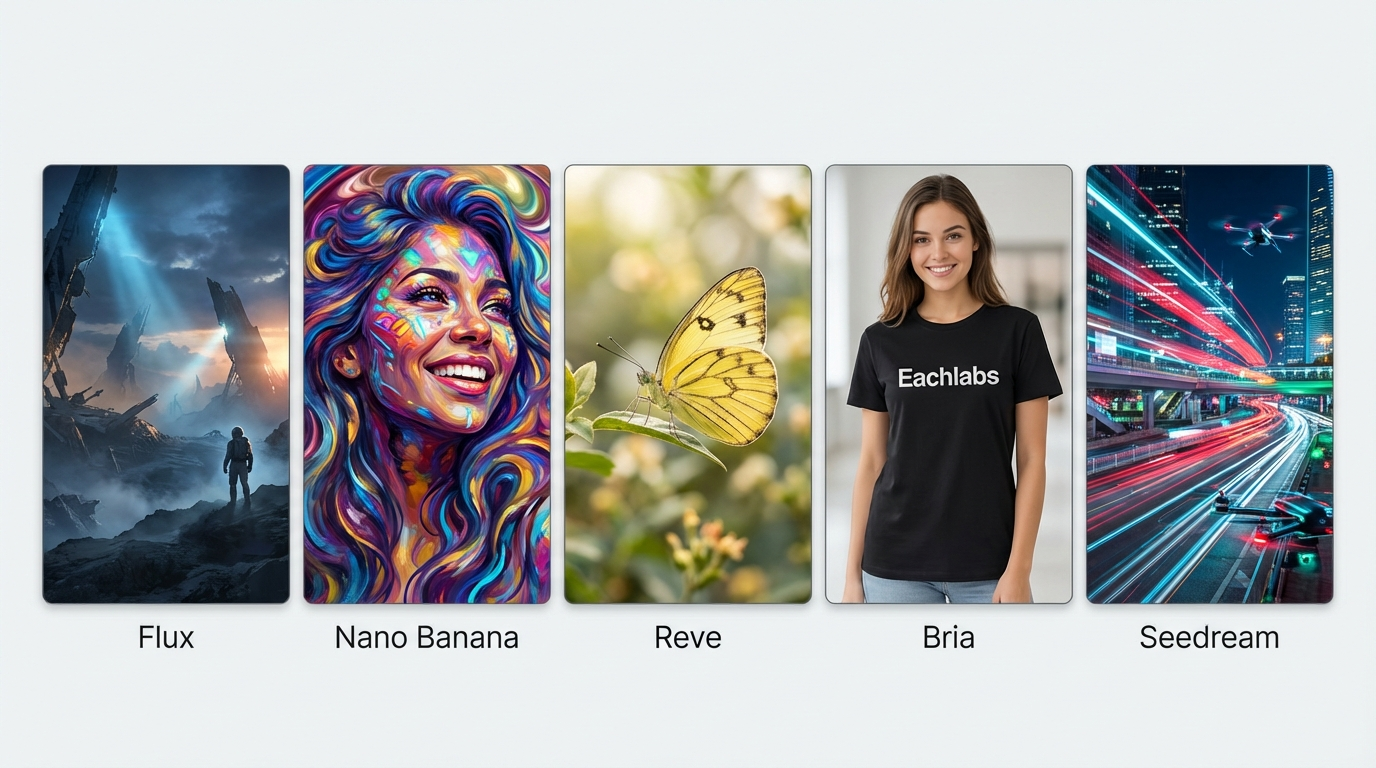
The rapid evolution of ai image models has transformed how creators, designers, and brands produce visual content. What once required hours of manual work can now be achieved in seconds with the right model. However, not all AI image generation models are built for the same purpose. Some prioritize realism, others focus on stylization, speed, or commercial safety.
In this guide, we compare some of the most popular ai image models—Flux, Nano Banana, Reve, Bria, and Seedream—to help you understand their strengths, limitations, and ideal use cases.
How These AI Image Models Differ
The landscape of AI image models has grown rapidly, but this growth has also introduced complexity. While many models can generate visually appealing images, they are not designed to solve the same creative problems. Each model reflects a different set of priorities, such as realism, stylistic expression, generation speed, or commercial reliability.
Some AI image models are optimized for cinematic depth and visual storytelling, producing images that feel atmospheric and immersive. Others are built to generate expressive, highly polished visuals that perform well on social media and trend-driven platforms. There are also models that prioritize clean structure and predictability, making them better suited for minimal design systems or professional workflows where consistency matters more than creative experimentation.
Another important distinction lies in scalability and production speed. Certain models are designed to handle high-volume image generation efficiently, making them ideal for large content pipelines. In contrast, more detail-oriented models may require longer generation times but deliver richer textures, lighting accuracy, and visual depth.
Commercial use is another key factor separating AI image models. Some prioritize brand-safe outputs and conservative aesthetics to reduce risk in marketing and advertising contexts. Others allow for greater artistic freedom but may require more careful prompt control depending on the use case.
Because of these differences, selecting the right AI image model is less about finding a single “best” option and more about matching the model to your creative and operational needs. The comparison below breaks down how Flux, Nano Banana, Reve, Bria, and Seedream differ in terms of intended use, stylistic focus, and overall production approach, making it easier to choose the right tool for each type of project.
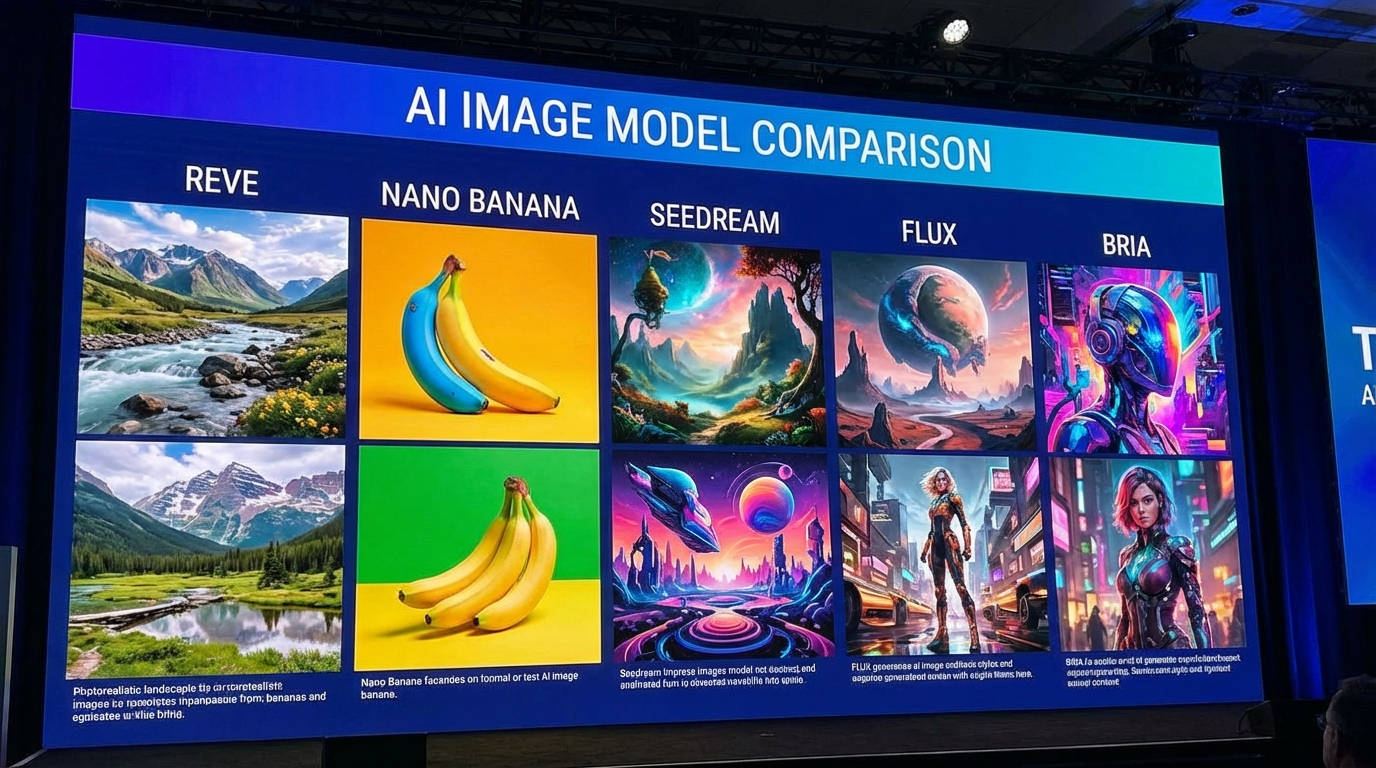
Side-by-Side Comparison Overview
|
Model |
Best For |
Style Focus |
|---|---|---|
|
Flux |
Cinematic & concept visuals |
Realistic, atmospheric |
|
Nano Banana |
Portraits & social media trends |
Expressive realism |
|
Reve |
Clean, structured images |
Neutral, controlled |
|
Bria |
Commercial & brand-safe visuals |
Conservative |
|
Seedream |
High-volume image generation |
Simple, scalable |
Flux is an AI image model designed for cinematic and concept-driven visuals. It focuses on realistic and atmospheric imagery, making it well-suited for scenes that require depth, dramatic lighting, and strong visual storytelling. Flux operates at a medium speed, balancing generation time with output quality. Its high level of realism makes it a strong choice for projects that aim to replicate a cinematic or film-like aesthetic.
Nano Banana is optimized for portraits and social media trends. It delivers expressive realism by combining detailed facial features with vibrant colors and polished textures. The model runs at a medium speed, allowing for consistent and refined outputs without sacrificing quality. With its high realism and visually striking style, Nano Banana is particularly effective for viral content, avatars, and highly shareable visuals.
Reve focuses on clean and structured image generation. Its neutral and controlled style prioritizes balance and clarity over dramatic expression. Reve also operates at a medium speed and offers a moderate level of realism, making it ideal for minimal designs, organized compositions, and projects that require visual consistency rather than bold stylistic flair.
Bria is built for commercial and brand-safe visuals. It follows a conservative style approach, ensuring professional and reliable outputs suitable for marketing, product imagery, and corporate use. Bria runs at a medium speed and delivers a medium level of realism, prioritizing predictability and brand alignment over artistic experimentation.
Seedream is designed for high-volume image generation where speed and scalability are essential. It features a simple and scalable visual style, allowing teams to produce large quantities of images efficiently. Seedream operates at high speed while maintaining a medium level of realism, making it a practical choice for workflows that prioritize volume and consistency over fine detail.
Choosing the Right AI Image Model
There is no single “best” option among ai image models. The right choice depends on what you’re trying to create.
- For expressive portraits and viral visuals, Nano Banana excels
- For cinematic scenes and depth-heavy imagery, Flux stands out
- For clean and predictable outputs, Reve is a solid choice
- For commercial safety and branding, Bria is ideal
- For speed and scale, Seedream delivers efficiency
Many advanced workflows combine multiple models to balance creativity, control, and speed.
Wrapping Up
The growing ecosystem of ai image models gives creators unprecedented flexibility. Flux, Nano Banana, Reve, Bria, and Seedream each serve distinct creative and technical needs. Understanding their strengths allows you to choose the right tool for each project instead of forcing one model to do everything.
As AI image generation continues to evolve, the most effective creators will be those who treat models as specialized tools rather than one-size-fits-all solutions.
Frequently Asked Questions
ai 1. What are ai image models used for?
AI image models are used to generate visuals from text prompts, including portraits, illustrations, marketing visuals, concept art, and social media content.
2. Which ai image model is best for realism?
Models like Flux and Nano Banana are known for higher realism, especially in lighting, texture, and facial detail.
3. Can multiple ai image models be used in one workflow?
Yes. Many creators use one model for base generation and another for refinement or stylization to achieve better results.