All Rumors About Kling 4.0: What X Saw Before Launch
A leaked menu, a quiet early access window and a 21:9 short film nobody was supposed to have. Every Kling 4.0 rumor from X, credited, and sorted into confirmed and still talk.

Official spec sheets tell you what a model is supposed to do. X tells you what it actually did, usually a week earlier and with far less polish. With Kling 4.0, the gap between those two stories was short but loud: a leaked model menu, a quiet early access window, a short film that nobody was supposed to have yet, and a wave of creators muting their speakers just to stare at the lip sync.
This is the Kling 4.0 rumor file. Every claim below comes from a post we actually opened, credited to the person who made it. We picked creators who share their own AI video work, and we marked clearly what Kling has confirmed and what is still talk. If you read our GPT Image 2 rumor roundup, you know the format. The model is different. The pattern isn't.
The Kling 4.0 Leak That Started It
The first serious signal came on September 24, four days before anyone outside Kling could touch the model. @koltregaskes, Kol Tregaskes, a UK-based AI commentator who tracks leaks and releases, posted a screenshot of a Kling model menu with two entries nobody had seen before: VIDEO 4.0 Preview and VIDEO 4.0 Flash Preview. The settings bar under it read 1080p, 30s, 16:9.
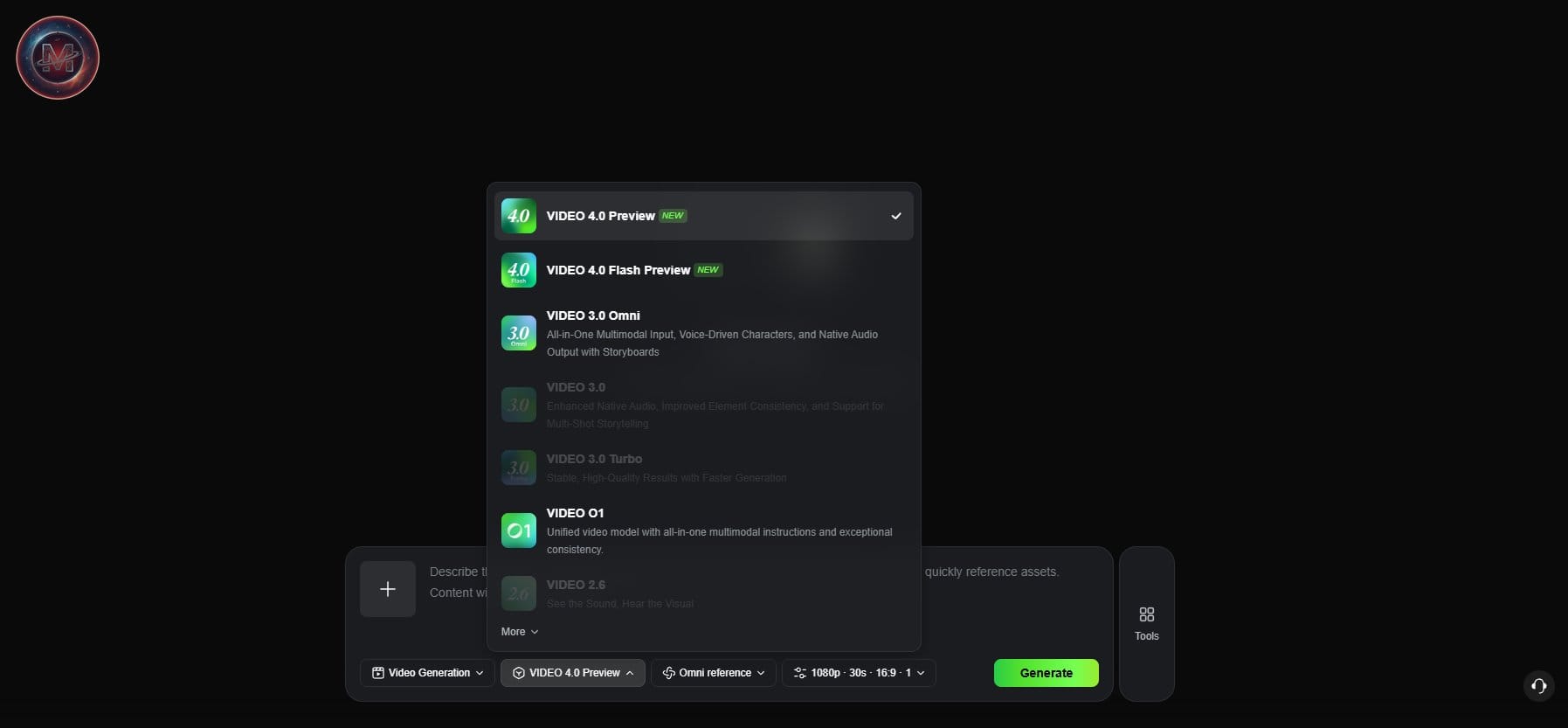
The post listed what the leak suggested: generations up to 30 seconds, an Omni Reference system with 15 elements in total, output up to 1080p, video extensions to 60 seconds, up to 3 voice references, and an experimental Long Video mode that would produce 120-second clips at 1080p and extend them forward and backward. Kol also mentioned a Kling Image 4.0 model that "apparently generates 1-9 images at a time, up to 4K, possibly 8K." The post passed 55,000 views.
Read it as a leak, because that's what it was. Some of it held up almost word for word a few days later. Some of it still hasn't been confirmed, and one number turned out to be too modest.
Kling Makes It Official
On September 28, Kling's official account stopped the guessing: "Kling 4.0 is coming this October. Kling 4.0 Flash is live now for Ultra Yearly subscribers."
From @Kling_ai. The official announcement: Kling 4.0 arrives in October, and Flash is already live for Ultra Yearly subscribers.
The announcement confirmed the parts of the leak that mattered most. Native 30-second generation. Omni Reference with up to 15 multimodal references. Then it went further than the leak had: up to 4K resolution and 10-bit HDR output, where the leaked menu showed 1080p. Kling also listed multi-keyframe control with up to 10 keyframes, high-quality stereo audio, more accurate lip sync, video extension, and support for multiple languages, accents and dialects.
So the 1080p ceiling in the screenshot was most likely the preview build's setting, not the final model's limit. That's the most useful thing a leak can teach you: the shape is usually right, the numbers are a snapshot.
The Full Kling 4.0 Shows Up in 21:9
Flash was the version people could use. The full model was the one everyone wanted to see, and it surfaced on September 29 in a short film called SPARE.
@hq4ai, an AIGC artist who makes AI films and interactive stories, said Kling invited them into its internal test and that the film was generated with the full-power version of Kling 4.0 using Omni Reference. Their verdict, translated from Chinese: the full version is "still a lot stronger than Flash." They called out four things: native 30-second output straight from the model, clearer picture and sound, more precise lip matching, and the 21:9 cinematic frame.
We took this from @hq4ai. SPARE, made with the full Kling 4.0 in 21:9. @hq4ai says the full version is a lot stronger than Flash.
Kling reposted the film the next day with a one-line caption: "The full-powered KLING 4.0 in action." By the time we checked, SPARE had passed 250,000 views. That repost matters more than the view count. It's the closest thing to an official preview of the full model that exists right now, and it lines up with the 21:9 support Kling has described.
Lip Sync Is the Kling 4.0 Rumor Everyone Agrees On
If there's one point where creators stopped disagreeing, it's the mouth. Kling's own announcement promised "more accurate lip sync." The early posts made it sound like an understatement.
@huangyun_122 put it bluntly on October 4. Translated: mute the sound, watch the actor's mouth, and you can already guess 90% of the words. Then came the request every early tester seems to share: hurry up and launch it.
That's a strong claim from a single post, and it's about Flash footage, not a controlled test. Still, fast delivery is exactly where AI lip sync has always slipped, so it is the right place to look first when the full model ships.
Flash in the Wild: Twenty Seconds at a Time
Most of what people saw of the new model came from Flash, and most of it wasn't a benchmark. It was people making things.
@JayKay65220066, Jay Kay, a member of Kling's creator partner program, posted a Halloween piece called Cat with Orbs and noted it was "Made with Kling ai 4.0 Flash 20 second generation early access." A tiny bat-winged cat on a mossy rock, a fog-filled forest, glowing mushrooms and jack-o'-lanterns, all held together across a single long generation.
We took this from @JayKay65220066. Cat with Orbs, a single 20-second generation on Kling 4.0 Flash early access.
Twenty seconds doesn't sound like much until you remember what it replaces. With 15-second clips, a scene like that is two generations and a cut you have to hide. A single take means the fog, the light and the cat all stay the same cat. That's the quiet promise inside the 30-second headline: fewer seams, and fewer places for consistency to break.
Kling's Own Proof: The Beat
On October 4, Kling published a behind-the-scenes breakdown of The Beat, a short film it says has passed 5 million impressions across social platforms. It's a drummer who loses her instruments one by one and finds a new rhythm in a few discarded paint buckets.
From @Kling_ai. The Beat opens on one continuous 30-second shot, and Kling says it has passed 5 million impressions.
The production notes are more useful than the story. Kling says the opening was designed as a continuous 30-second shot with a 35mm lens look and moderate depth of field, so the camera could stay on the drummer while the action kept moving around her. According to Kling, Omni Reference is what kept the many moving parts in place: her performance, the movers in the background, the changing environments and a visual style that drifts from realism into something surreal.
Take it for what it is: a showcase from the model's maker. But it's the clearest public explanation yet of how Kling expects people to use 30 seconds. Not as a longer clip. As a shot you'd normally need a whole crew to block.
Rumor vs Confirmed: What We Still Don't Know About Kling 4.0
Here's where things stand, sorted honestly.
Confirmed by Kling: a full launch in October, Flash live now for Ultra Yearly subscribers, native 30-second generation, up to 4K and 10-bit HDR, up to 15 multimodal references, up to 10 keyframes, stereo audio, more accurate lip sync, video extension and multiple languages, accents and dialects.
Shown by testers, not measured: the full model looking clearly stronger than Flash, lip sync holding up through fast delivery, and native 21:9 framing in the full build.
Still a rumor: extensions to 60 seconds, a 120-second experimental Long Video mode, 3 voice references and a separate Kling Image 4.0 model. All of these come from the September 24 leak. Kling's announcement mentions video extension but gives no length, and it doesn't mention an image model at all.
Kling also said it would take the stage at Advertising Week New York on October 6 and share a closer look at the next generation of its video work ahead of the Kling 4.0 launch. If any of the open rumors get settled before release day, that's the likeliest place.
What This Means If You Build on Kling Today
You don't have to wait for October to get ready. The habits that will matter most with Kling 4.0 are the ones the current family already rewards.
The Kling 3.0 family on each::labs generates 3 to 15 seconds per clip. Write your prompts as scenes with a beginning, a turn and an end now, using Kling 3.0 Pro text-to-video, and doubling the length later becomes an upgrade instead of a rewrite. Build your reference sets with Kling O3 Pro reference-to-video: clean frontal images, consistent lighting, one subject per reference. Our guide to keeping the same character across AI video shots covers the details, and they carry straight over to a 15-reference system.
If you're wiring video into a product, set up your pipeline once and route by shot type, the way we described in calling Kling, Veo and Sora through one endpoint. Multi-step jobs belong in each::labs flows. When the full model arrives, you'll be able to use Kling 4.0 directly on each::labs, in the same place you already run Kling today.
Frequently Asked Questions
When does Kling 4.0 come out?
Kling's official post says October 2026. Flash, the lighter version, opened to Ultra Yearly subscribers on September 28, and it's what most of the early test clips on X were made with.
Is the Kling 4.0 leak accurate?
Mostly. The 30-second length, the 15-element Omni Reference and the Flash variant all matched Kling's announcement. The leaked 1080p ceiling didn't: Kling confirmed up to 4K and 10-bit HDR. The 60-second extensions, the 120-second Long Video mode, 3 voice references and Kling Image 4.0 are still unconfirmed.
What's the difference between Kling 4.0 and Kling 4.0 Flash?
Flash is the faster, lighter build available now in early access. Kling hasn't published a side-by-side spec, but testers like @hq4ai who saw the full model said it's noticeably stronger, with cleaner picture and sound and better lip matching.
Can I use Kling 4.0 on each::labs?
Not yet. It's coming to each::labs, and in the meantime the Kling 3.0 and O3 families are live, so you can build your prompts, references and pipelines now and move them over when it lands.