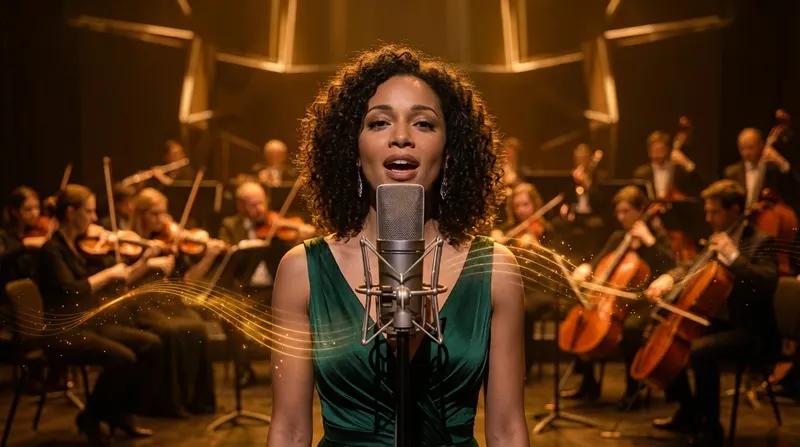
AI Singing Voice Gets More Real: How Mureka V8 Improves Vocal Expression
AI voice singing has moved far beyond robotic tones and flat performances. In recent years, AI-generated vocals have become a central focus in music creation, but realism has remained the biggest challenge. While many tools can generate melodies and lyrics, the singing voice often feels emotionally shallow or mechanically precise in a way that breaks immersion. Mureka V8 represents a turning point in AI voice singing, shifting the focus from basic vocal output to expressive, emotionally grounde
By Bartu Varol · Jan 27, 2026 · 4 min read

AI voice singing has moved far beyond robotic tones and flat performances. In recent years, AI-generated vocals have become a central focus in music creation, but realism has remained the biggest challenge. While many tools can generate melodies and lyrics, the singing voice often feels emotionally shallow or mechanically precise in a way that breaks immersion.
Mureka V8 represents a turning point in AI voice singing, shifting the focus from basic vocal output to expressive, emotionally grounded performances that feel closer to human singers.
This article explores how Mureka V8 improves vocal expression, why AI voice singing realism matters, and how this evolution changes the way creators work with AI-generated music.
The Evolution of AI Voice Singing
Early AI voice singing systems were designed to replicate pitch and timing, not emotion. They could technically “sing,” but the result often sounded stiff or synthetic. This was acceptable for demos or experiments, but not for real creative use.
As expectations grew, creators began demanding more from AI voice singing tools:
- Natural phrasing instead of rigid timing
- Emotional variation instead of monotone delivery
- Vocals that feel connected to the music, not layered on top
Mureka V8 builds on this demand by rethinking how vocals are generated at a structural and expressive level.
Why Vocal Expression Is the Core of AI Voice Singing
The human voice is the emotional center of a song. Even small imperfections in tone or phrasing are instantly noticeable to listeners. This is why vocal realism matters more than almost any other element in AI-generated music.
In AI voice singing, poor vocal expression leads to:
- Weak emotional impact
- Reduced listener engagement
- Songs that feel unfinished or artificial
Mureka V8 treats vocal expression as a primary component rather than an afterthought, allowing vocals to shape the emotional narrative of the song.
How Mureka V8 Improves AI Voice Singing Quality
AI Voice Singing with Natural Phrasing
One of the most significant improvements in Mureka V8 is how vocals flow within a song. Instead of evenly spaced, mechanical phrasing, the model introduces more human-like timing:
- Natural pauses between lines
- Subtle timing variations
- Smoother transitions between phrases
This makes AI voice singing feel less programmed and more performed.
Emotional Dynamics in AI Voice Singing
Emotion is not static in real singing—it changes throughout a song. Mureka V8 reflects this by allowing vocals to evolve emotionally as the track progresses.
This includes:
- Softer delivery in intimate sections
- Increased intensity during climaxes
- Controlled restraint where needed
By supporting emotional variation, Mureka V8 creates AI voice singing performances that feel alive rather than repetitive.
Reducing Artificial Vocal Artifacts
A common issue in earlier AI voice singing models was the presence of digital artifacts—unnatural textures, harsh edges, or overly processed tones. Mureka V8 minimizes these artifacts, resulting in:
- Cleaner vocal tone
- Better blend with instrumentation
- More natural-sounding resonance
The vocals sit more comfortably in the mix, reducing the need for heavy post-processing.
AI Voice Singing and Musical Coherence
Great singing is not just about the voice—it’s about how that voice interacts with the music. Mureka V8 improves this relationship by aligning vocals more closely with melody and structure.
You’ll notice:
- Better pitch movement that follows melodic arcs
- Fewer awkward note transitions
- Stronger emphasis on key lyrical moments
This cohesion helps AI voice singing feel intentional and musically grounded.
Expanding Creative Boundaries with AI Voice Singing
As AI voice singing becomes more expressive and natural, it begins to move beyond basic music generation into a broader creative toolset. Instead of being limited to simple demo tracks, vocal AI can now support more nuanced and intentional creative outcomes.
AI Voice Singing as a Creative Companion
Rather than replacing human vocals, AI voice singing can act as a creative companion. Creators can experiment with vocal tone, phrasing, and emotion early in the process, using AI-generated vocals to explore ideas that might otherwise take hours of recording and revision.
This approach is especially valuable during the early stages of songwriting, where speed and flexibility matter more than perfection.
Supporting Mood-Driven Projects
Many creative projects rely on atmosphere rather than lyrics alone. AI voice singing with improved emotional control allows creators to generate vocal layers that reinforce mood, tension, or intimacy without overpowering the overall composition.
This makes AI-generated vocals useful not only in songs, but also in ambient soundscapes, cinematic cues, and immersive audio experiences.
Lowering Barriers to Vocal Experimentation
Traditional vocal production often requires access to vocalists, recording equipment, and studio time. AI voice singing reduces these barriers, enabling creators to test vocal-driven concepts quickly and iterate freely.
This accessibility encourages experimentation across genres and styles, helping creators discover new directions without committing resources too early.
Shifting How Audiences Experience AI Vocals
As vocal quality improves, audiences begin to engage with AI-generated singing differently. Instead of focusing on whether a voice is artificial, listeners respond to how well the vocals communicate feeling and intention.
This shift signals a broader change: AI voice singing is no longer just a technical novelty, but a legitimate expressive medium when used thoughtfully and creatively.
Wrapping Up
Mureka V8 demonstrates how AI voice singing can move beyond technical accuracy into emotional expression. By focusing on natural phrasing, dynamic emotion, and musical coherence, it addresses one of the most persistent limitations in AI-generated vocals.
For creators who care about how a song feels—not just how it’s generated—Mureka V8 offers a more refined and expressive approach to AI voice singing.
Frequently Asked Questions
1. What makes AI voice singing in Mureka V8 different from earlier models?
Mureka V8 prioritizes vocal expression, natural phrasing, and emotional variation, resulting in vocals that feel more human and musically integrated.
2. Can AI voice singing with Mureka V8 be used for complete songs?
Yes. Mureka V8 is designed to generate full songs with expressive singing voices that align with melody and emotional tone.
3. Who benefits most from improved AI voice singing technology?
Musicians, content creators, storytellers, and media producers who need emotionally realistic vocals benefit most from advanced AI voice singing systems like Mureka V8.