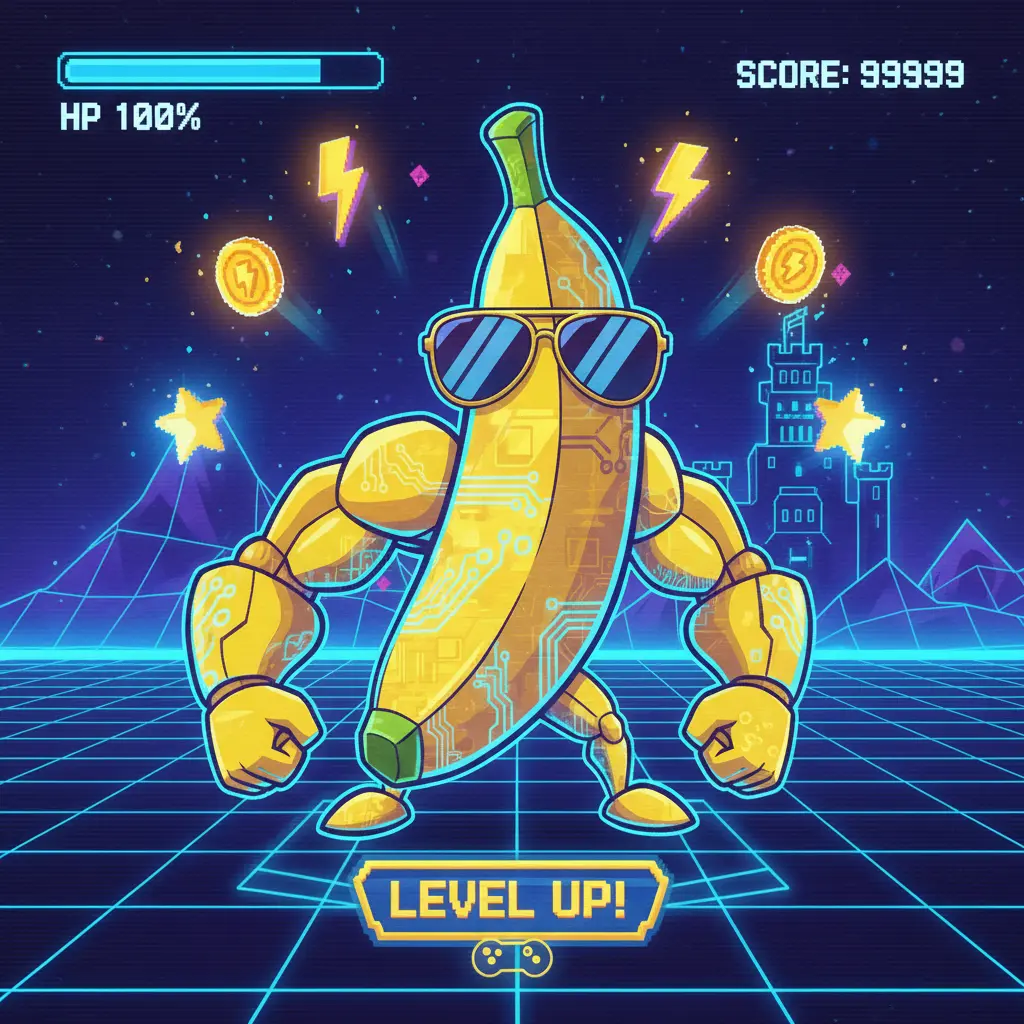
 inference · 5.0s
Nano Banana
Synthesize low-cost and resource-friendly images in seconds for mobile apps and rapid prototyping processes using the nano-banana model.
- Runtime (p50)
- 5s
- Estimated price
- $0.04
Overview
nano-banana — Text-to-Image AI Model
Developed by Google as part of the nano-banana family, nano-banana is a text-to-image AI model powered by the Gemini 2.5 Flash Image architecture, designed for rapid, low-latency image generation ideal for mobile apps and prototyping workflows. This Google text-to-image solution excels in producing high-quality visuals in seconds, supporting resolutions up to 1K for efficient, resource-friendly outputs that prioritize speed without sacrificing detail. Users searching for a text-to-image AI model with conversational editing capabilities will find nano-banana's multimodal processing—handling text prompts alone or combined with images—enables unprecedented control for iterative design.
Capabilities
- Generates high-quality images from text prompts and uploaded photos
- Edits existing images with natural language instructions, including object replacement, style transfer, and scene modification
- Maintains character and style consistency across multiple images and edits
- Blends multiple images or styles into a single cohesive output
- Supports rapid, real-time creative workflows with most edits under 10 seconds
- Integrates invisible watermarking for authenticity and provenance
- Interprets complex scenes, diagrams, and sketches with context-aware understanding
- Enables iterative storytelling and scene refinement without loss of coherence
Use cases
Use Cases for nano-banana
For developers building AI image editor API for mobile apps, nano-banana processes text prompts plus reference images to generate prototypes rapidly—upload a UI sketch and prompt "add a nano banana dish in a Gemini-themed restaurant with elegant plating," yielding a polished 1K visual in seconds for quick testing.
Marketers creating e-commerce visuals use its text rendering to produce product mockups with accurate labels; input a photo and "place this shoe on a urban street at dusk with 'Limited Edition' text in bold script," streamlining campaigns without design software.
Designers prototyping infographics leverage multi-image synthesis, combining logos and charts via prompts for cohesive layouts; this supports iterative refinements conversationally, ideal for teams needing text-to-image AI model efficiency in branding workflows.
Content creators for social media generate themed assets grounded in real-time data, like "current weather map of Tokyo with cherry blossoms," using Google Search integration for timely, factual visuals that boost engagement.
Tips & tricks
How to Use nano-banana on Eachlabs
Access nano-banana seamlessly through Eachlabs' Playground for instant testing, API for production-scale nano-banana API calls, or SDK for custom integrations. Provide text prompts, optional reference images (up to 14), aspect ratios like 16:9, and resolution settings (1K optimized), receiving high-quality PNG images with embedded text and refined compositions in seconds.
---Technical spec
What Sets nano-banana Apart
The nano-banana model stands out in the competitive landscape of text-to-image AI through its optimization for high-volume tasks, delivering images at 1K resolution (around 1024x1024 pixels) with aspect ratios like 16:9 and processing times under seconds. Unlike many models, it leverages a "thinking mode" that generates interim thought images to refine compositions, ensuring precise prompt adherence for complex scenes.
- Advanced multimodal input with up to 14 reference images: Combine text prompts with multiple images for synthesis; this allows precise style transfers and fusions, enabling developers to build sophisticated AI image generator API tools that maintain consistency across references.
- Legible text rendering in images: Produces clear, stylized text suitable for infographics and menus; marketers gain professional assets like posters without post-editing, a edge over models struggling with typography.
- Conversational iteration and Google Search grounding: Edit images via follow-up text or ground visuals in real-time data; creators achieve context-aware outputs like current event visuals, differentiating it for dynamic Google text-to-image applications.
Supporting formats include PNG outputs via Gemini API, with configs for 1K/2K/4K (nano-banana focuses on efficient 1K), making it a top choice for nano-banana API integrations.
Things to be aware of
- Some experimental features, such as advanced style blending and multi-image storytelling, may behave unpredictably in edge cases
- Users report occasional quirks with object placement or background consistency, especially in highly complex scenes
- Performance benchmarks indicate superior speed and consistency compared to leading competitors, but resource requirements for high-res outputs may be significant
- Consistency across edits is a major positive theme in user reviews, with many praising the model’s ability to maintain character identity
- Common concerns include occasional generic outputs when prompts are not sufficiently detailed
- Positive feedback centers on speed, ease of use, and creative flexibility
- Negative feedback patterns include limitations in ultra-realistic rendering and occasional artifacts in blended images
Key considerations
- Nano Banana excels at maintaining character and style consistency across multiple images, which is critical for storyboarding and branding
- Best results are achieved with clear, detailed prompts that specify desired styles, objects, and context
- Iterative refinement is encouraged; users can repeatedly edit and adjust images without losing coherence
- Quality and speed are balanced, but extremely complex scenes may require additional prompt tuning for optimal results
- Prompt engineering is key: specifying relationships, lighting, and mood yields more accurate outputs
- Avoid overly vague prompts, as the model may default to generic interpretations
- Watermarked outputs ensure authenticity but may affect workflows requiring unmarked images
Limitations
- Primary technical constraint is the lack of publicly disclosed parameter count and architectural details, limiting transparency for advanced users
- May not be optimal for ultra-realistic photorealism or highly specialized artistic styles outside its trained domains
- Complex multi-object scenes can sometimes result in minor inconsistencies or artifacts, requiring prompt refinement
Note: The model won't always follow the exact number of image outputs that the user explicitly asks for.
Related models
4 models


About Nano Banana
What is Nano Banana text-to-image and how does it generate images?
Nano Banana is Google's base-tier lightweight text-to-image model that generates images from natural language prompts with a focus on fast generation and cost efficiency. It is the foundational model in the Nano Banana family, designed for rapid iteration, prototyping, and high-volume applications where speed and affordability are more important than maximum fidelity.