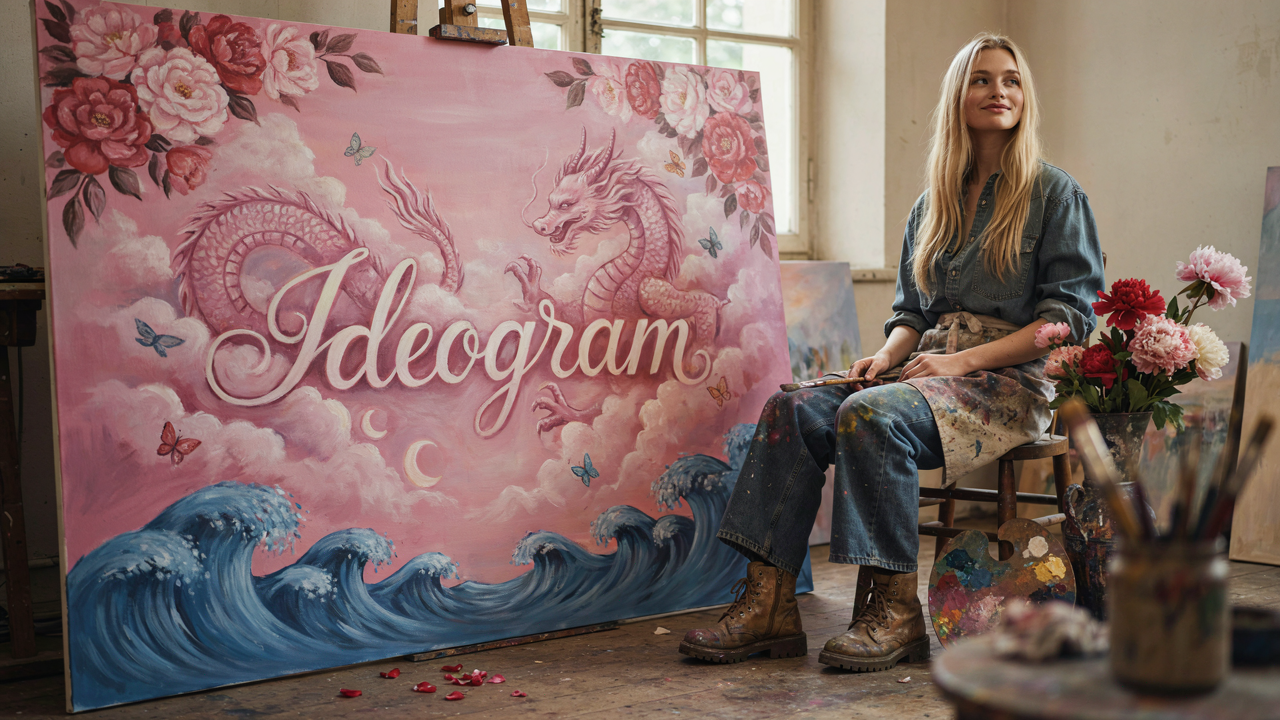
Ideogram 4.5.
- Ideogram
- Text to Image
- $0.03–$0.22 per image, depending on quality
Ideogram 4.5 generates images from text with accurate typography for posters, logos, and visual designs.
What Ideogram 4.5 is good at.
 Best for
Ideogram 4.5 is useful when this specific operation fits between source preparation and delivery.
These scenarios show how it can support different parts of a working pipeline.
 Limits and tips
Make the main subject, composition, lighting and intended visual style unambiguous.
When references are available, state which details should be retained and which should change. Start with one clear creative direction before adding several…
 Related modelView model
Qwen Image 2.1 Text to Image
Run it on the same input to compare output, speed and price.
Model documentation
About this model
Ideogram 4.5 generates images from text with accurate typography for posters, logos, and visual designs. Choose from three quality levels and multiple sizes.
Overview
Ideogram 4.5 Overview
Ideogram 4.5 generates images from text with accurate typography for posters, logos, and visual designs. Choose from three quality levels and multiple sizes.
The model generates images from a prompt with selectable rendering controls and sizes.
Ideogram 4.5 from Ideogram is available through each::labs in the ideogram family. Required fields are prompt.
image_size: Output image size. quality: Text-to-image quality.
Use the Ideogram 4.5 API when you need this transformation or analysis as a repeatable step in an application or creative pipeline. The sections below distinguish the required material, adjustable controls and checks that matter before delivery.
Capabilities
Capabilities
- The model generates images from a prompt with selectable rendering controls and sizes.
- image_size: Output image size.
- quality: Text-to-image quality.
- num_images: Number of images to generate.
- Produces a image result for the next stage of your workflow.
Use cases
Use Cases for Ideogram 4.5
Ideogram 4.5 is useful when this specific operation fits between source preparation and delivery. These scenarios show how it can support different parts of a working pipeline.
Creators
Draft a poster with short display text. Use a representative source or a concise brief, then inspect the result before preparing a larger set of assets.
Design and marketing teams
Explore a logo concept. Compare the result with the intended message, composition and destination. Keep reviewable versions of the source and output.
Developers
Create a visual direction for a campaign. Inspect the actual returned value before connecting it to another step, and keep the chosen request settings with the result.
Start with a clear definition of the desired result and use the exposed controls to reach it. Keep any additional generation, editing or application logic in separate steps so that the effect of this operation remains easy to review.
Tips & tricks
Tips and Tricks
Make the main subject, composition, lighting and intended visual style unambiguous. When references are available, state which details should be retained and which should change. Start with one clear creative direction before adding several competing requests.
- quality: Text-to-image quality.
- num_images: Number of images to generate.
- Example direction: “A ceramic cup on a pale stone table, soft window light, centered composition, uncluttered background.”
- Example direction: “An editorial illustration of a small garden, balanced shapes, muted green palette, simple background.”
Compare one deliberate adjustment at a time. Inspect the part of the result affected by that change, then check the rest of the asset or response for unwanted side effects before reusing the settings.
Technical spec
Technical Specifications
- Result type: image.
- Required fields: prompt.
- image_size: string; options square_hd, square, portrait_4_3, portrait_16_9, landscape_4_3, landscape_16_9, custom; default "square_hd".
- prompt: string.
- quality: string; options low, medium, high; default "medium".
- num_images: integer; default 1; minimum 1; maximum 8.
Values must use the types and accepted options listed in the parameter reference. A displayed default does not remove a required-field requirement. Choose a supported output setting for this entry rather than borrowing a preset from a related model.
Things to be aware of
Things to Be Aware Of
Review lettering, small structures, edges and any requested product details at the intended display size. An attractive first impression is not enough to establish that a visual matches its brief.
Optional settings are not necessarily interchangeable with those on another entry in the same family. Use the accepted names, types and values shown for this operation.
Check the returned content against the original input and your application requirements. A successful request means the operation completed; your application still needs to verify that the response is suitable for the next step.
Key considerations
Key Considerations
Spell any desired text explicitly and review the output lettering before publishing.
Public estimate: $0.03–$0.22 per image.
Prepare prompt before starting. Optional settings include image_size, quality, num_images. Keep these settings aligned with the intended delivery, especially when a later step expects a particular type or format.
Run a representative request before scaling to a larger collection. Judge the result against the source and the brief, and account for all generated outputs or usage-sensitive options when estimating a batch.
Limitations
Limitations
- prompt: minimum characters: 1; maximum characters: 10000.
- image_size: allowed values: ["square_hd", "square", "portrait_4_3", "portrait_16_9", "landscape_4_3", "landscape_16_9", "custom"].
Unsupported parameters do not establish additional capabilities. A generated result can differ from the intended brief, so review detail and consistency before publication.
Questions about this model
The short answers. For anything specific to your setup, talk to our team.
 Talk to an engineerPlan for your expected volume.
Ideogram 4.5 is a text-to-image model for creating images, posters, and logo concepts with readable lettering. Describe the scene and the words you want in your prompt, then select an image size and quality level. It supports workflows that combine visual design with typography.
Ideogram 4.5 can generate poster designs, storefront concepts, logo ideas, and other visuals that combine imagery with text. On each::labs, describe the composition, visual style, and desired wording in your prompt. These outputs can serve as starting points for design exploration and marketing content.
Ideogram 4.5 returns generated images with square, portrait, and landscape size options, alongside supported exact dimensions. Low, medium, and high quality levels are available, with medium selected by default. These controls let you adapt the image format and quality to your creative brief.