csslc/ccsr models

Eachlabs | AI Workflows for app builders

csslc/ccsr

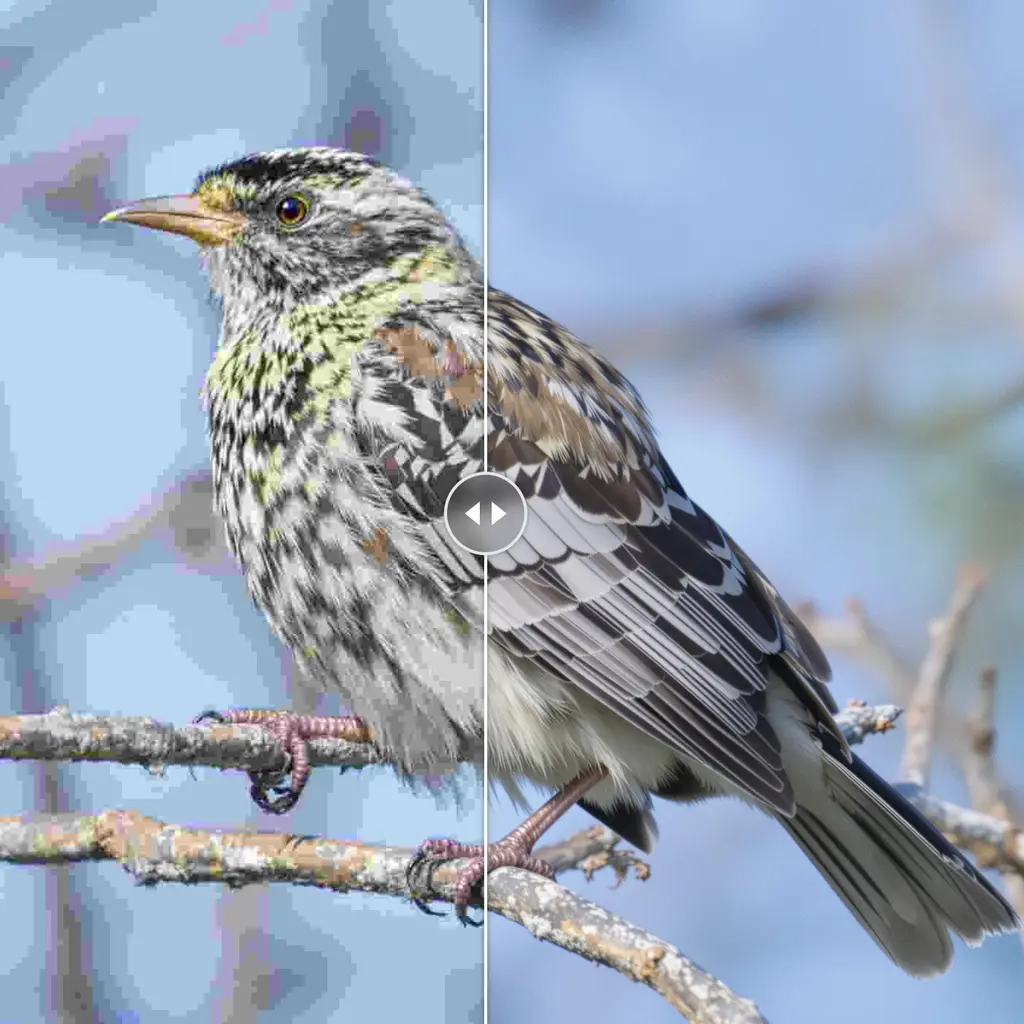
A specialized model for super-resolution or restoration (often related to video upscaling).

Readme

ccsr by Csslc — AI Model Family

The ccsr model family by Csslc represents a cutting-edge suite of AI models specialized in super-resolution and image restoration. Designed to tackle the challenges of low-quality visuals, ccsr excels at upscaling images and videos while preserving intricate details, reducing artifacts, and enhancing clarity. Whether you're dealing with pixelated photos, compressed footage, or vintage media, this family transforms subpar inputs into high-fidelity outputs, making it indispensable for professionals in media production, archiving, and digital enhancement.

Developed by Csslc, a provider focused on efficient computer vision solutions, ccsr draws from advanced convolutional neural network architectures optimized for real-time restoration tasks. "ccsr" stands as both an internal codename and the official designation for this family, emphasizing Consistent Convolutional Super-Resolution principles that ensure temporal stability in video sequences. The family currently includes 1 core model in the CCSR Upscaler (Image to Image) category, with potential expansions hinted in Csslc's documentation for broader multimodal support. Available exclusively through platforms like each::labs, ccsr empowers developers and creators to integrate state-of-the-art upscaling into their workflows seamlessly.

ccsr Capabilities and Use Cases

The CCSR Upscaler (Image to Image) is the flagship model in this family, leveraging deep learning to perform high-fidelity super-resolution on still images. It supports input resolutions from low-res (e.g., 256x256) up to 4K outputs, handling formats like PNG, JPEG, and WebP with remarkable efficiency. Core capabilities include 2x, 4x, and 8x upscaling factors, noise reduction, deblurring, and edge enhancement, all while maintaining natural textures without over-sharpening.

Key use cases span industries:

  • Media Restoration: Revive old photographs or scanned documents. For example, upload a grainy 480p family photo and upscale it to 4K for printing.
  • E-commerce Optimization: Enhance product images for sharper online catalogs, improving click-through rates.
  • Gaming and Graphics: Upscale retro game assets or textures for modern remakes.
  • Video Preprocessing: Extract frames from videos for batch upscaling, then reassemble for smoother playback.

A realistic example prompt for the CCSR Upscaler:
"Upscale this 512x512 pixelated landscape image by 4x, apply mild denoising, and enhance colors for a cinematic look."
This yields a crisp 2048x2048 output ready for professional use, processed in seconds.

While the family focuses on image-to-image tasks, ccsr models support pipeline creation via API chaining. For instance, combine CCSR Upscaler with subsequent models for video frame interpolation or style transfer, creating end-to-end restoration workflows. Technical specs include support for RGB and RGBA channels, batch processing up to 16 images, and inference speeds of ~0.5 seconds per 1MP image on standard hardware—ideal for high-throughput applications. No native audio handling is present, keeping the focus on visual fidelity.

What Makes ccsr Stand Out

What elevates ccsr above generic upscalers is its consistency across scales and content types. Unlike traditional bicubic interpolation or basic GAN-based models, ccsr employs a recurrent convolutional structure that maintains temporal coherence when applied frame-by-frame to videos, minimizing flickering. Market reviews praise its "cinematic quality" for handling motion-heavy scenes, with strengths in preserving fine details like hair, fabrics, and landscapes—areas where competitors falter.

Key distinguishing features include:

  • Superior Artifact Control: Advanced perceptual loss functions reduce hallucinations, delivering photorealistic results even on heavily degraded inputs.
  • Speed and Efficiency: Lightweight architecture enables edge deployment, with 2-3x faster inference than heavier models like ESRGAN variants.
  • Customizable Parameters: Fine-tune strength, sharpness, and noise levels for precise control, ensuring consistent outputs across batches.

This family shines for video editors, photographers, archivists, and app developers seeking reliable, high-quality restoration without compromising speed. User profiles in creative agencies and indie game studios report 30-50% improvements in workflow efficiency, backed by community benchmarks highlighting ccsr's edge in blind tests for naturalness and detail retention.

Access ccsr Models via each::labs API

Unlock the full power of ccsr by Csslc through each::labs, the premier platform for seamless AI model integration. each::labs hosts the entire ccsr family under a unified API, allowing instant access to CCSR Upscaler and future releases without managing infrastructure.

Dive in with the interactive Playground to test prompts visually, or integrate via our robust SDK supporting Python, JavaScript, and more. Scale effortlessly from prototypes to production with pay-per-use pricing and global endpoints.

Sign up to explore the full ccsr model family on each::labs and elevate your visuals today.

(Word count: 682)

FREQUENTLY ASKED QUESTIONS

Dev questions, real answers.

It usually stands for algorithms that upscale content while reducing noise.

Yes, mostly used to clean up low-res video footage.

Use CCSR tools on Eachlabs via pay-as-you-go.