Seedance 2.0 vs Kling 3.0: AI Video Generator Comparison
Early 2026 was a busy stretch for AI video. Seedance 2.0 vs Kling 3.0 became the comparison nobody could stop talking about, and for good reason. Both dropped within days of each other, both came loaded with serious capabilities, and both immediately sparked strong reactions online. Some corners of the internet declared Seedance 2.0 the end of professional filmmaking. Others insisted Kling 3.0 was the most technically impressive video model ever shipped. The reality is more interesting than eith
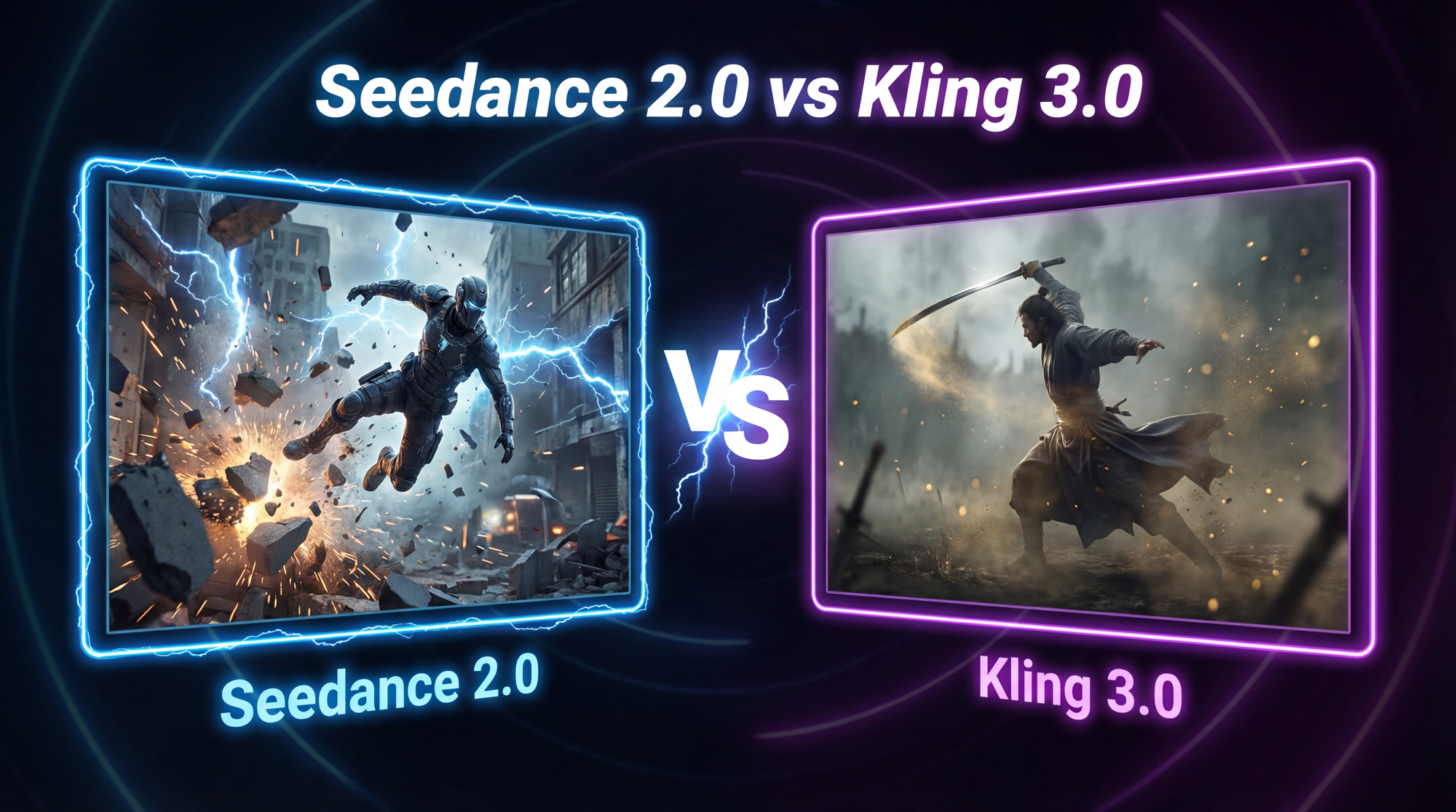
Early 2026 was a busy stretch for AI video. Seedance 2.0 vs Kling 3.0 became the comparison nobody could stop talking about, and for good reason. Both dropped within days of each other, both came loaded with serious capabilities, and both immediately sparked strong reactions online. Some corners of the internet declared Seedance 2.0 the end of professional filmmaking. Others insisted Kling 3.0 was the most technically impressive video model ever shipped. The reality is more interesting than either of those takes.
Neither model is trying to do exactly the same thing. Knowing that upfront changes how useful this comparison actually is. Rather than picking a winner, this breakdown looks at what each model genuinely does well and where it falls short, so you can make a call based on your own situation.
What Is Seedance 2.0?
Seedance 2.0 is ByteDance's upcoming video model, set to launch soon. Before getting into what makes it different, it helps to think about how most AI video tools actually work. You write a prompt, the model generates a clip. That's the whole loop. Seedance 2.0 breaks out of that pattern in a pretty meaningful way. Rather than limiting you to text input, it lets you bring in images, audio clips, and reference videos all at the same time. The model takes everything you give it and produces a single cohesive output from all of it. ByteDance calls this a unified multimodal architecture, which is just a technical label for something fairly practical: the model doesn't force you to choose one type of input.
The practical upside is that you've got a lot more say over what actually comes out. Want a specific visual look? Drop in a reference image. Got an audio clip that captures the mood? Include that too. Add a written scene description on top and the model works with all three at once rather than making you choose. For anyone who's spent time wrestling with AI tools that treat your reference material as decoration rather than direction, that difference matters.
Audio is probably the thing that catches people off guard first. Most video tools make you deal with sound after the fact. Generate the clip, then sort out music and dialogue separately. Seedance 2.0 skips that back-and-forth entirely by generating audio at the same time as the visuals, synchronized to the right frames. If you're running a lot of iterations and moving fast, that's a real time save.
Clips go up to 1080p and the model can handle multi-shot sequences in one go, so you can get a proper beginning, middle, and end from a single prompt without manually stitching things together after. It's also noticeably quick, reportedly around 30% faster than the previous Seedance version.
Action scene generated with Seedance 2.0, demonstrating high-energy motion and cinematic combat dynamics.
What Is Kling 3.0?
Kling 3.0 is avideo model, officially out since February 4, 2026. The simplest framing for it is this: where Seedance 2.0 is built around speed and creative flexibility, Kling 3.0 is built around structured control. That's not a subtle difference. You feel it pretty quickly when you start generating with both tools.
The lineup includes Video 3.0, Video 3.0 Omni, plus image generation variants. Each serves a different tier of use case, but the Omni version is where things get most interesting for professional work. With Omni, you bring in a reference video and the model extracts visual traits, movement style, and voice characteristics from that reference, then carries all of it into completely new scenes. For anyone producing content where the same character or product has to appear consistently across a whole campaign, that's a capability that's hard to replicate any other way.
On the technical side, Kling 3.0 pushes to 4K HDR in its higher-end variants and handles clips up to 15 seconds, a 50% jump over what the previous version could do. The physics modeling is one of the upgrades people keep mentioning specifically. Gravity, inertia, fabric, lighting all behave more realistically than in earlier Kling releases. The result is footage that tends to look like it was shot rather than generated.
Action scene generated with Kling 3.0, showcasing physically grounded motion and cinematic combat continuity.
Seedance 2.0 vs Kling 3.0: Key Differences
Video Quality and Resolution
Both models put out quality you wouldn't have expected from AI video tools even a year ago. That said, they're aiming at different things. Seedance 2.0 tops out at 1080p and the frames are sharp, high contrast, the kind of visuals that pop on a phone screen. Kling 3.0 goes further with its Omni variants pushing to 4K HDR. More texture, more precise lighting during fast transitions, the kind of detail that holds up when you blow it up on a monitor or a broadcast display. If you're producing content that needs to look good at scale, that gap matters.
Motion and Physics
Honestly this is where the two models feel most different day to day. Seedance 2.0 is built for energy. Action, fast movement, the moments you want someone to stop scrolling for. In shorter clips it delivers on that consistently. Push it into a longer sequence with multiple characters moving around and things can start to drift a little.
Kling 3.0 approaches motion differently. The physics feel more thought through. Fabric moves with actual weight. When a character runs you can see the balance shifting the way it would in real life. Faces hold stable even when the camera's moving fast. The footage looks less like something generated and more like something shot. That's not a small thing.
Generated with Kling 3.0, showcasing physically grounded motion and cinematic combat continuity.
Audio Generation
Both models handle audio natively, which is still a big deal. Seedance 2.0 gives you synchronized music, ambient sound and dialogue all in one generation and it sounds clean. Kling 3.0 goes wider on languages. Chinese, English, Japanese, Korean, Spanish and it handles regional accents inside those languages too. You can have two characters speaking different languages in the same scene and the model manages the lip sync and speaking order for both. For anyone making content for international audiences that's genuinely useful.
Consistency Across Multiple Shots
Character consistency is honestly where Kling 3.0 pulls ahead the most. The same character across different camera angles, different scene changes, even with voice sync happening at the same time, the visual identity holds. Seedance 2.0 is solid in short clips but in longer multi shot sequences you may notice variation creeping in. Not a dealbreaker depending on what you're making, but worth knowing going in.
A cinematic scene generated with Kling 3.0. The camera orbits around a character from behind, gradually revealing her face as she looks up and smiles. Demonstrates smooth camera movement, stable facial consistency, and natural lighting across a full motion.
Generation Speed
Seedance 2.0 is noticeably faster. Testing a lot of prompts, iterating through variations, finding what works that speed compounds over a session. Kling 3.0 takes more time but the outputs tend to need less cleanup afterward. How much that tradeoff matters really comes down to your specific production setup.
Real-World Use Cases
When Seedance 2.0 Makes More Sense
If you're making content for social media, Seedance 2.0 is hard to beat for that environment. TikTok, Reels, Shorts, these are places where you've got about two seconds before someone keeps scrolling and Seedance 2.0 understands that. The visual energy it produces is exactly what those platforms reward.
Marketing teams running high volume campaigns also benefit a lot from the speed and the multimodal input. You can bring in a reference image, drop in an audio clip, write out the scene, and the model pulls them together with real fidelity to all three. Agencies working against tight deadlines tend to find that flexibility genuinely useful rather than just a checkbox feature.
When Kling 3.0 Makes More Sense
The people getting the most out of Kling 3.0 right now are the ones who need things to stay consistent across many different shots. Directors doing previsualization, brands maintaining a character or a product look across a whole campaign, studios using AI to rough out scenes before committing to production. These are the workflows where Kling 3.0 actually earns its slower generation time.
The Smart Storyboard tool is worth calling out specifically. You can define up to six shots inside a single generation, specifying duration, shot size, camera angle, and movement for each one individually. The model then runs the whole sequence with visual continuity between every cut. For anyone trying to tell a story that has to flow logically from start to finish, that changes how you approach the work.
Delivers native 2K/4K output with sharper texture detail and smoother color transitions, built to meet the demands of professional production and high-resolution display.
Which One Should You Actually Use?
The honest answer is that it depends on what you're making.
If you need a lot of content out the door fast and the visuals need to land hard immediately, Seedance 2.0 is probably your tool. The energy it generates matches the attention economy most creators are operating in.
If you're working on something where the same people or products need to show up consistently across many scenes, or where you need footage that could pass for something a real crew shot, Kling 3.0 is where that kind of control lives.
What keeps coming up when people compare these two is that one's built for immediacy and the other's built for precision. That's a real difference and it points pretty directly at which one belongs in your workflow.
Try Seedance 2.0 vs Kling 3.0 on Eachlabs
You can access Kling 3.0 directly on Eachlabs and start running your own prompts right now. As for Seedance 2.0, once it goes live on the platform you'll be able to run both models through the same prompt and see what each one does with it. That side by side comparison will tell you more than any written breakdown can.
Wrapping Up
Seedance 2.0 and Kling 3.0 landed close together but they're not really competing for the same thing. Seedance is about moving fast, hitting hard, and giving creators a flexible multimodal setup that works well under time pressure. Kling is about getting the details right, keeping things consistent across many shots, and producing footage that looks like it came from a real production. Both did something interesting in early 2026. If you want to see what Kling 3.0 can do right now, Eachlabs is where to go.
Frequently Asked Questions
What's the main difference between Seedance 2.0 vs Kling 3.0?
Honestly the clearest way to put it is that they're built around different priorities. Seedance 2.0 moves fast, handles multiple input types well, and produces visually punchy output that suits high-volume social media and marketing work. Kling 3.0 slows down to get more things right, particularly around character consistency, multi-shot continuity, and cinematic-grade output. If you need a lot of content fast, go Seedance. If you need things to look the same across a whole campaign or series of scenes, Kling is the safer bet.
Which model outputs higher resolution video, Seedance 2.0 or Kling 3.0?
Kling 3.0 goes up to 4K HDR in its Omni variants while Seedance 2.0 maxes out at 1080p. For broadcast work or anything that needs to hold up at large sizes, Kling 3.0 has the technical edge there.
Do Seedance 2.0 and Kling 3.0 both generate audio natively?
Both do. Seedance 2.0 produces music, dialogue and sound effects alongside the video in a single generation. Kling 3.0 extends that with five language support including regional accents and the ability to handle multi character scenes where each person's speaking a different language at the same time.