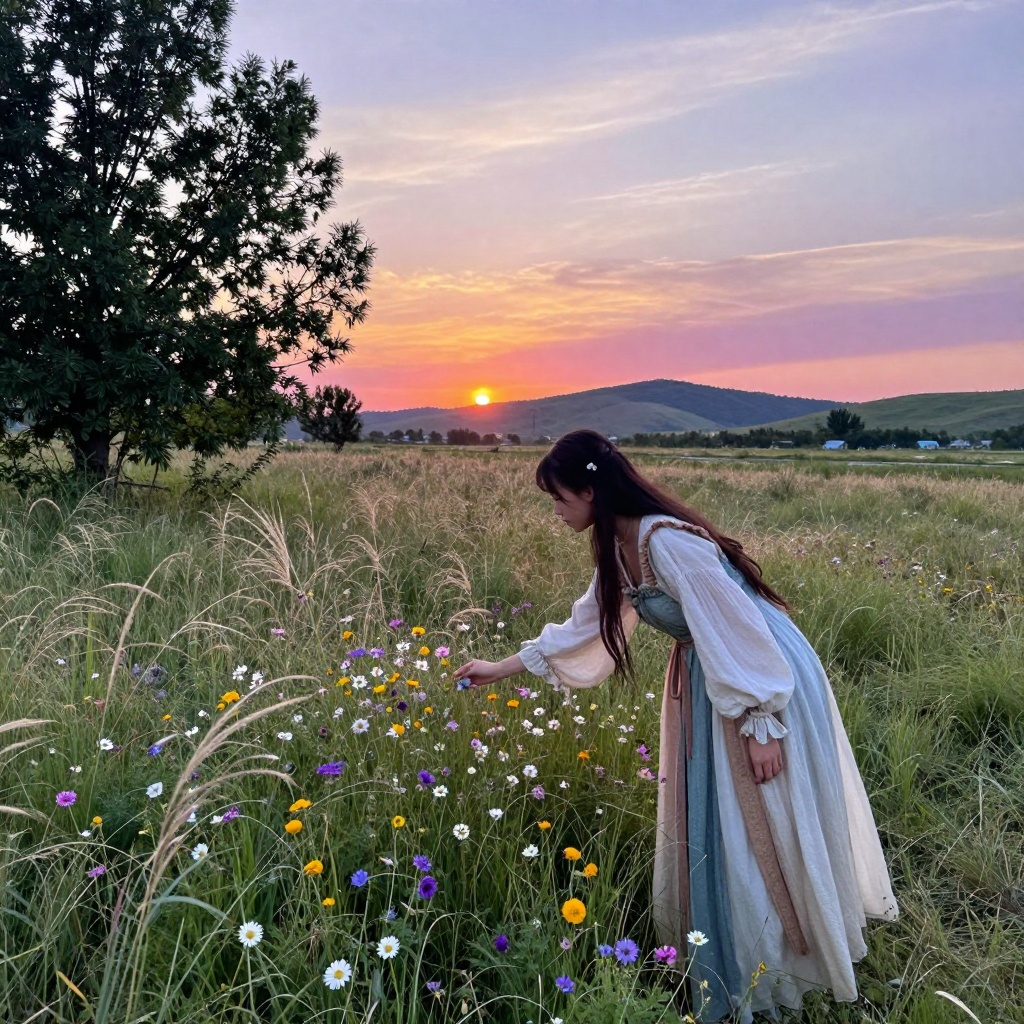
 inference · 0.6s
Pruna | P-Image | Text to Image
P-image is a text-to-image model that generates high-quality visuals from text prompts with ultra-fast performance and consistent results, built for production use cases.
- Runtime (p50)
- 1s
- Estimated price
- $0.005 per execution
Overview
p-image-text-to-image — Text-to-Image AI Model
Developed by Pruna as part of the P-Image family, p-image-text-to-image is a text-to-image AI model that delivers high-quality visuals from text prompts in under one second, making it ideal for production-scale applications where speed and cost matter most. This ultra-fast p-image-text-to-image model generates images for less than a cent per run while maintaining competitive quality, solving the bottleneck of slow inference times in high-volume workflows like e-commerce visuals or app integrations. Developers seeking a fast text-to-image API can rely on its consistent results without compromising on detail or prompt adherence.
Capabilities
- No confirmed capabilities for P-image; searches highlight general 2025 strengths like high clarity, realistic styles, and style stability in top models
- Special features: Trends include text rendering for comics and object relationship accuracy
- Quality of outputs: Fine details, sharp zooms, and low distortion in leading generators
- Versatility and adaptability: Handles diverse styles from Picasso to Ghibli, per user tests
- Technical strengths: Fast inference and scalable training, as in NVIDIA frameworks
Use cases
Use Cases for p-image-text-to-image
Developers building AI image generator APIs for e-commerce platforms use p-image-text-to-image to dynamically create product visuals on demand. Input a prompt like "a sleek wireless earbud on a minimalist white background with soft glow lighting" paired with aspect ratio settings, and get photorealistic results in under a second—perfect for personalized listings without stock photo libraries.
Content creators leveraging Pruna text-to-image speed produce thumbnail variations instantly for YouTube or social media. A marketing team generates dozens of "vibrant summer cocktail with tropical fruits and condensation beads" images during A/B testing, iterating faster than manual design tools and cutting costs dramatically.
App developers integrate this p-image-text-to-image API for real-time user experiences, such as chatbots visualizing descriptions. Designers crafting mood boards input prompts for "futuristic cityscape at dusk with neon signs and flying cars" to populate prototypes rapidly, maintaining workflow momentum.
Production pipelines in gaming or advertising benefit from its low-latency edge, generating asset previews like "pixel art hero character wielding a glowing sword" to accelerate feedback loops across teams.
Tips & tricks
How to Use p-image-text-to-image on Eachlabs
Access p-image-text-to-image through Eachlabs' Playground for instant testing with text prompts, resolution, and aspect ratio controls, or integrate via API and SDK for production apps. Input a descriptive prompt and optional parameters like image dimensions up to high-megapixel outputs to receive high-quality PNG/JPEG files in sub-second times—optimized for scalable, cost-effective text-to-image workflows.
---Technical spec
What Sets p-image-text-to-image Apart
p-image-text-to-image stands out in the text-to-image landscape with its sub-second generation speed on standard hardware, enabling real-time applications that competitors cannot match. This capability allows developers to integrate Pruna text-to-image models into live services, such as instant preview tools, without latency issues.
- Sub-1-second inference time produces images at production quality, optimized via Pruna's toolkit for efficiency on A100 GPUs and beyond—far quicker than multi-second models like SDXL variants. Users benefit from scalable deployments, running millions of generations affordably at under a cent each.
- Built specifically for production use cases, it maintains high visual fidelity and prompt following in a compact design, outperforming larger models in speed-to-quality ratio. This enables seamless text-to-image AI model integration for apps needing consistent, rapid outputs without fine-tuning.
- Supports standard resolutions from 512x512 up to high-megapixel outputs, with flexible aspect ratios for diverse formats. Production teams gain versatility for web, mobile, or print without multiple model switches.
Unlike slower state-of-the-art options, p-image-text-to-image prioritizes throughput, making it the go-to for fast image generation model searches.
Things to be aware of
- No user discussions on P-image; general feedback notes dropping hallucinations in 2025 models
- Known quirks: Absurd hallucinations unique to some like GPT Image-1
- Performance considerations: Generation speeds of ~1 minute per image in benchmarks
- Resource requirements: Scalable to thousands of GPUs for training, per frameworks
- Consistency factors: Strong in style stability and text-image alignment
- Positive user feedback themes: Ease of use for beginners, high detail retention
- Common concerns: Slower speeds for complex tasks, resolution limits like 4K max
Key considerations
- No model-specific factors available; general 2025 trends emphasize prompt complexity handling and multimodal integration for optimal results
- Best practices from similar models include detailed prompts for object placement and text rendering to minimize errors
- Common pitfalls: Misinterpreting prompts or hallucinations, as seen in GPT Image-1's absurd outputs
- Quality vs speed trade-offs: Newer models balance high fidelity with generation times of 30-60 seconds
- Prompt engineering tips: Use descriptive language for styles, relationships, and details to improve consistency
Limitations
- Lack of public documentation, reviews, or benchmarks makes adoption risky without verification.
- No evidence of community support or real-world testing, unlike established 2025 models with proven metrics.
- Potential absence from leaderboards and discussions indicates unproven performance in competitive landscape.
Related models
4 models

About Pruna | P-Image | Text to Image
What is the p-image-text-to-image model on eachlabs?
p-image-text-to-image is a highly optimized generative AI model available on eachlabs. It is designed to convert text prompts into high-quality images with superior speed, using compression techniques to minimize latency for real-time applications.