
WHISPER
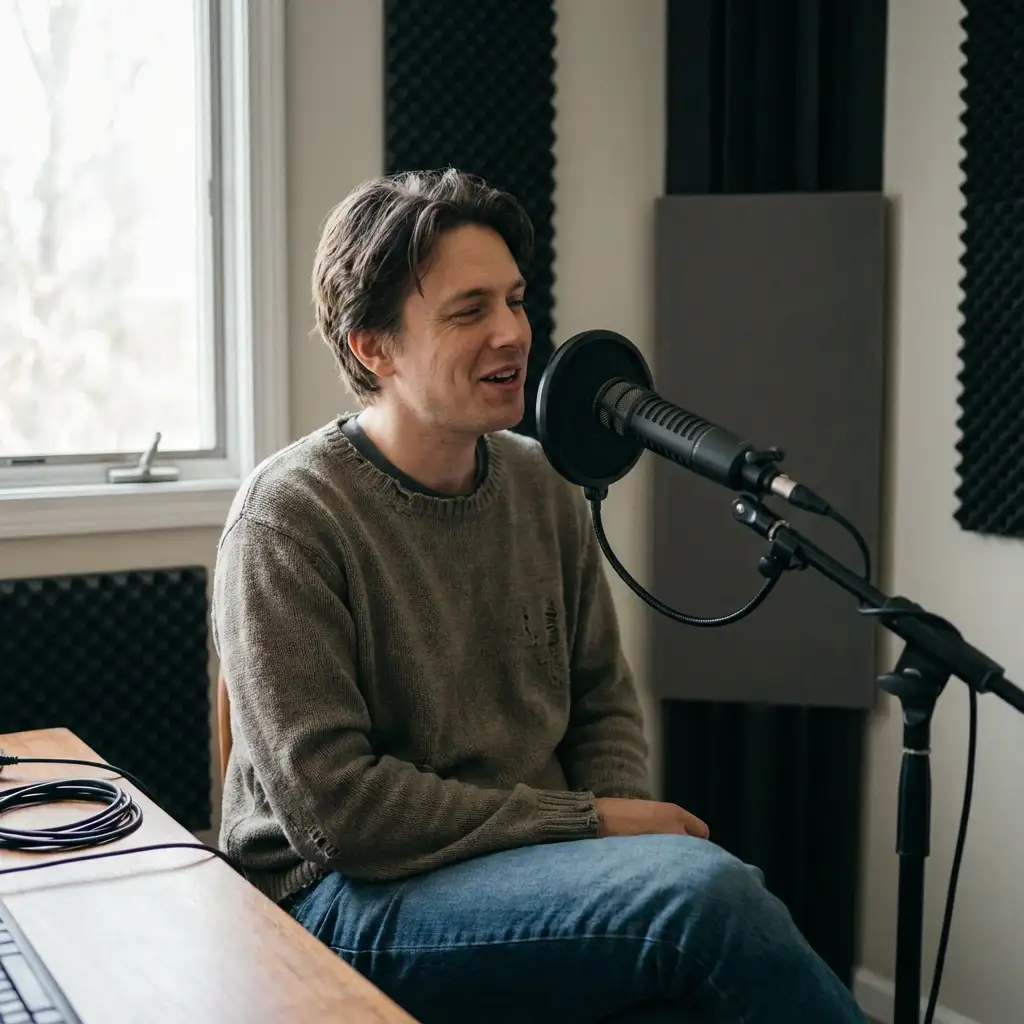
Whisper is designed to turn speech into text across multiple languages.
Avg Run Time: 8.000s
Model Slug: whisper
Playground
Input
Output
Example Result
Preview and download your result.
API & SDK
EACHLABS_API_KEY environment variable. Copy your real API key from /api-keys and set it locally before running.Create a Prediction
Send a POST request to create a new prediction. This will return a prediction ID that you'll use to check the result. The request should include your model inputs and API key.
Get Prediction Result
Poll the prediction endpoint with the prediction ID until the result is ready. The API uses long-polling, so you'll need to repeatedly check until you receive a success status.
Readme
Overview
whisper — Voice-to-Text AI Model
Whisper transforms spoken audio into accurate text transcripts across nearly 100 languages, solving the challenge of reliable multilingual speech recognition for developers, creators, and businesses seeking robust voice-to-text AI models. Developed by OpenAI as part of the Whisper family, this open-source model excels in handling diverse accents, background noise, and real-world audio conditions where traditional systems falter. Trained on 680,000 hours of labeled data, Whisper delivers 95%+ accuracy in optimal settings, making it a go-to for OpenAI voice-to-text applications like transcription APIs and live captioning.
Technical Specifications
What Sets whisper Apart
Whisper stands out among voice-to-text AI models with its Transformer-based encoder-decoder architecture trained on massive multilingual datasets, enabling near-human accuracy across 98 languages without manual language selection. This allows users to process global audio content seamlessly, from podcasts to international calls, reducing errors in cross-lingual workflows.
- Multilingual transcription in 98 languages with automatic detection: Whisper identifies and transcribes speech in languages like English, Spanish, Chinese, and Japanese directly, enabling developers building whisper API integrations for international apps without per-language models.
- Robust noise and accent handling at 95%+ accuracy: It maintains excellent performance on compressed audio (32-64 kbps, 16 kHz mono) and varied accents, outperforming traditional systems in noisy environments for reliable voice-to-text AI outputs.
- Tolerant of low-bitrate inputs up to 25 MB (100+ minutes): Optimized for formats like MP3 or M4A at 16 kHz sample rate, Whisper processes long-form audio efficiently with minimal preprocessing, ideal for scalable transcription pipelines.
These specs—mono channel, 16-bit depth, and fast GPU-accelerated inference via WhisperX—ensure low latency, with community benchmarks showing 50% faster response times on optimized files.
Key Considerations
- Whisper is optimized for 16 kHz audio; resampling and proper normalization are important to achieve expected accuracy.
- Larger checkpoints (e.g., Large-v2 / Large-v3) yield higher transcription quality and better multilingual coverage but require significantly more GPU memory and compute time; smaller models (Tiny/Base/Small) are better suited for low-latency or CPU-bound deployments.
- Accuracy can drop for very low-volume, heavily compressed, or over-processed audio; pre-processing (loudness normalization, denoising) often improves results, especially for meetings, calls, and field recordings, as reported by tool authors and GitHub users.
- Long recordings need to be chunked into 30-second windows; choices around segmentation (voice activity detection, overlap, buffering) affect both accuracy and alignment of timestamps, as highlighted in community implementations and benchmarks.
- Translation mode (non-English to English) can be very effective but may bias toward English output if language detection is uncertain; users often explicitly set the source language for higher reliability according to community guidance.
- Whisper tends to handle background noise and overlapping speakers better than many older ASR systems, but diarization (who spoke when) is not built-in; users often pair Whisper with separate speaker diarization models or pipelines.
- There is a quality–speed trade-off: small models are fast but less accurate on difficult accents or noisy audio; large models are slower but significantly more robust, especially for domain-specific terminology and rare languages.
- For production, users commonly cache language detection results, reuse encoder features for multiple passes, or adopt faster variants/quantization to control latency, based on community performance tuning reports.
- Prompting with initial tokens (e.g., specifying language, task, or style) steers the decoder and can reduce hallucinations or mistaken language switches, according to user experiments and open-source wrapper libraries.
- Fine-tuning is not part of the original release; most practitioners treat Whisper as a frozen encoder–decoder and adapt around it (e.g., post-processing, custom language models, or using frozen encoder features for other speech tasks).
Tips & Tricks
How to Use whisper on Eachlabs
Access Whisper through Eachlabs' Playground for instant testing or integrate via API/SDK with audio inputs like MP3/M4A (mono, 16 kHz, 32-64 kbps, up to 25 MB). Provide your file, and receive plain text transcripts with optional timestamps and language detection. Outputs deliver high-accuracy results optimized for production-scale voice-to-text workflows.
---Capabilities
- Robust multilingual ASR across a wide range of languages, dialects, and accents, enabled by training on hundreds of thousands of hours of diverse web audio.
- Direct speech-to-text transcription and direct speech-to-English translation within the same model; supports multilingual input and can output timestamps for each segment in a single pass.
- Strong noise robustness and ability to handle non-studio recordings, including phone-quality audio, meetings with background chatter, and field recordings, as documented in independent evaluations and user testimonials.
- Good performance on long-form content such as podcasts, lectures, interviews, and videos, with community reports noting relatively low drift and consistent quality over hours of audio when segmented properly.
- Broad domain coverage (technical talks, movies, tutorials, meetings) due to large and diverse training data; users report that Whisper often recognizes technical jargon and named entities without custom language models.
- High-quality encoder representations that generalize well to other speech tasks: studies show that frozen Whisper encoder features support state-of-the-art performance in tasks such as speaker verification, speech quality prediction, and disordered speech assessment when paired with lightweight task heads.
- Open-source availability of core models and weights (for original Whisper release), leading to a rich ecosystem of wrappers, GUIs, and integrations, and enabling on-device or on-premises deployments for privacy-sensitive applications.
What Can I Use It For?
Use Cases for whisper
Developers integrating real-time transcription: Build live captioning for video calls or apps using Whisper's low-latency pipeline; feed 20-40 ms audio chunks via client-server setups for 1-2 second end-to-end delays, perfect for OpenAI voice-to-text API in telehealth or virtual meetings.
Content creators transcribing podcasts: Upload multilingual episodes recorded at 32 kbps MP3, and Whisper auto-detects languages while handling background noise, producing formatted paragraphs ready for editing—streamlining workflows for global podcasters seeking accurate voice-to-text AI models. Example input: a 30-minute interview in English-Spanish code-switching, output as timestamped text.
Marketers analyzing customer calls: Transcribe sales recordings with regional accents using Whisper's 95%+ accuracy on diverse speech, generating summaries for insights; this supports data-driven campaigns without hiring transcription services.
Researchers processing field audio: Convert hours of interviews from noisy environments into searchable text across 98 languages, leveraging automatic VAD chunking to minimize hallucinations and boost precision in academic or compliance tools.
Things to Be Aware Of
- Experimental behaviors:
- Whisper can occasionally hallucinate content—producing plausible but incorrect text, especially in very low-SNR segments or when the audio is silent or unintelligible; users have reported this on Reddit and in issue trackers.
- In translation mode, it may paraphrase rather than literally translate, which is desirable for subtitles but can be problematic for strict verbatim requirements.
- Quirks and edge cases:
- Language detection sometimes misclassifies closely related languages or heavily accented speech, leading to output in the wrong language; users commonly work around this by forcing the language parameter.
- For code-switching (frequent language changes in one utterance), Whisper can struggle to maintain the correct script or language tagging; community feedback notes mixed performance depending on the dominant language.
- Timestamp alignment is generally good but not frame-perfect; users who require precise word-level alignment often post-process Whisper output with forced alignment tools.
- Performance considerations:
- Large models are GPU-intensive; community benchmarks indicate that running Large in real time can require high-end GPUs, while CPU-only inference of Medium or Large is often too slow for interactive use.
- Memory usage grows with batch size and model size; users report out-of-memory errors when trying to batch long segments or run Large on low-memory GPUs, requiring careful batching and model choice.
- Resource requirements:
- Running Whisper at scale (e.g., transcribing thousands of hours) demands substantial compute and storage bandwidth; blogs comparing ASR engines highlight Whisper’s favorable accuracy but note the need for efficient pipelines (VAD, batching, resampling) to control costs.
- Consistency factors:
- Decoding randomness (temperature, beam size) affects reproducibility; to get stable, repeatable transcripts across runs, users typically set low temperature and deterministic decoding settings.
- Punctuation and casing are largely inferred by the model; while generally good, inconsistencies appear for non-standard names or stylized text, and some users add post-processing for domain-specific formatting.
- Positive user feedback themes:
- High recognition quality out-of-the-box on diverse, real-world audio, often surpassing older commercial and open-source ASR in accuracy, especially for noisy or accented speech.
- Multilingual support without separate per-language models, which many users cite as a major advantage for global content collections.
- Open-source availability and permissive usage for research and many production scenarios, enabling offline, privacy-preserving deployments and extensive customization.
- Common concerns or negative feedback:
- Latency and hardware requirements for the larger models, especially for organizations needing real-time or large-scale processing.
- Occasional hallucinations and overconfident outputs on non-speech segments, requiring external speech activity detection or confidence estimation.
- Limited explicit support for speaker diarization and word-level timestamps; many users must assemble multi-component pipelines to achieve full “who said what, when” labeling.
Limitations
- Whisper is compute-intensive at larger scales; Large and Medium models can be too slow or resource-heavy for strict real-time requirements or low-end hardware, making smaller models or alternative ASR systems preferable in latency-critical contexts.
- While multilingual and robust, Whisper is not always optimal for highly specialized domains, under-resourced dialects, or quiet/whispered speech compared with newer, domain-tuned ASR models that specifically target those niches.
- The model can hallucinate content or mis-handle language detection and code-switching in challenging conditions, so it may not be ideal as the sole transcription source where strict verbatim accuracy and traceable confidence scores are mandatory without additional validation or post-processing.
Related AI Models
You can seamlessly integrate advanced AI capabilities into your applications without the hassle of managing complex infrastructure.
Create an RVC v2 voice cloning dataset from a Url automatically.

Qwen3-ASR-Flash-Filetrans transcribes audio files into text with support for 26 languages, emotion detection, and word-level timestamps. It is optimized for long audio files (up to 2GB, 12 hours) using asynchronous batch processing. The model supports formats including aac, amr, flac, m4a, mp3, ogg, opus, wav, webm, wma, wmv, as well as video containers. Additional features include inverse text normalization, multi-channel audio transcription, and context biasing for domain-specific vocabulary.

Creates custom voices optimized for use with Kling 2.6 Voice Control, enabling natural, expressive, and controllable voice output.

Splits a song into 12 individual audio stems and extracts each instrument as MIDI data, returning both stem tracks and MIDI files ready for DAW use.

Dev questions, real answers.
OpenAI Whisper is a large-scale automatic speech recognition model developed by OpenAI. It transcribes spoken audio to text with high accuracy across more than 50 languages, handling diverse accents, background noise, and audio quality with robust multilingual performance.
OpenAI Whisper is accessible through the eachlabs unified API. Submit an audio file; the model returns a text transcript. eachlabs handles authentication and billing on a pay-as-you-go basis no separate OpenAI account is required.
OpenAI Whisper is best suited for multilingual transcription, podcast indexing, subtitle generation, and voice command processing. Its broad language coverage and noise robustness make it a reliable general-purpose ASR model for both consumer applications and enterprise audio processing pipelines.