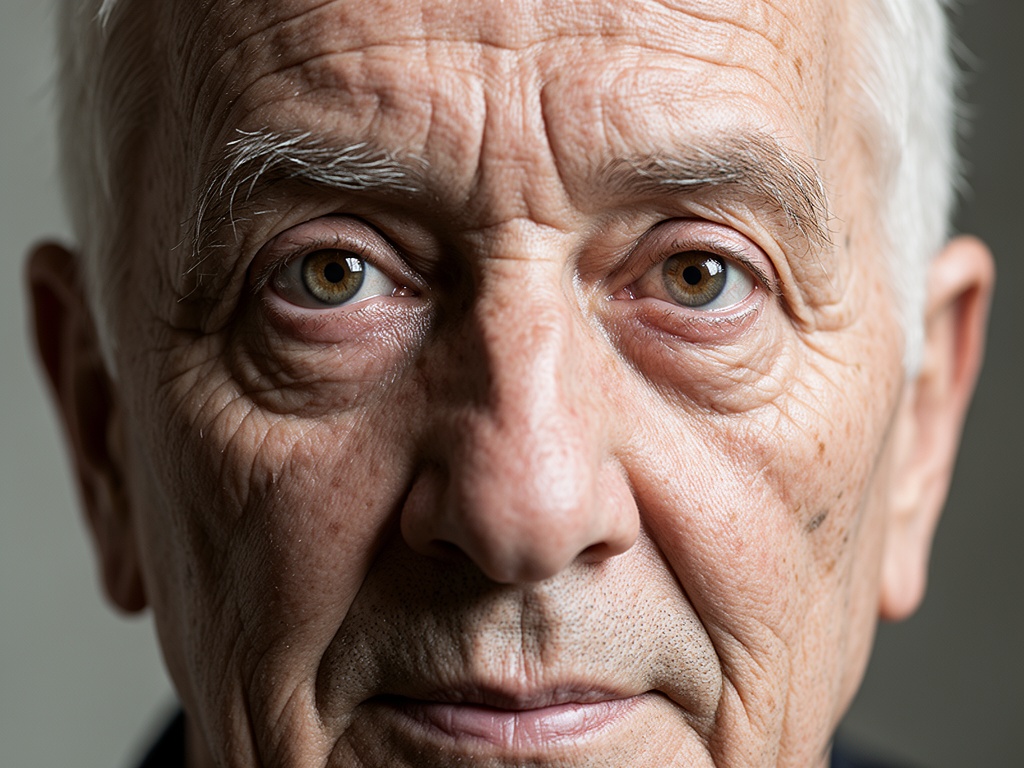
Flux 2 | Klein | 9B | Base | Text to Image
FLUX.2 [klein] 9B Base from Black Forest Labs delivers text-to-image generation with enhanced realism, sharper text rendering, and built-in native editing capabilities.
- Runtime (p50)
- 7s
- Estimated price
- $0.013 / image
Overview
flux-2-klein-9b-base-text-to-image — Text-to-Image AI Model
flux-2-klein-9b-base-text-to-image, the 9B Base variant from Black Forest Labs' FLUX.2 [klein] family, empowers developers and creators with high-fidelity text-to-image generation and unified image editing in a single compact architecture. This text-to-image AI model excels at producing photorealistic images with sharp text rendering and multi-reference editing, solving the need for separate tools in workflows requiring maximum quality and customization. Released in January 2026, it prioritizes detailed outputs via 25-50 step sampling, making it ideal for Black Forest Labs text-to-image applications where precision trumps speed. Supporting 1024x1024 resolution and higher, flux-2-klein-9b-base-text-to-image delivers exceptional prompt fidelity for complex visual storytelling.
Capabilities
- Generates photorealistic images from text descriptions with exceptional prompt fidelity and visual accuracy
- Produces sharp text rendering within generated images, addressing a common weakness in many image generation models
- Supports unified text-to-image generation and image editing within a single model architecture
- Enables multi-reference image editing, allowing generation based on multiple reference images simultaneously
- Delivers high diversity in outputs, producing varied results from similar prompts
- Provides extensive customization through adjustable sampling steps and CFG parameters
- Supports fine-tuning and custom pipeline development through the Base model variant
- Generates images at 1024x1024 resolution with capability for higher resolutions
- Maintains quality consistency across different prompt types and artistic styles
- Offers flexibility for research applications and experimental workflows
Use cases
Use Cases for flux-2-klein-9b-base-text-to-image
Game developers creating concept art: Leverage multi-reference editing by uploading character sketches and environment images alongside a prompt like "a cyberpunk warrior in neon-lit ruins, sharp holographic text overlay reading 'Neo-Tokyo 2147'." This generates intricate, consistent visuals with precise text rendering, accelerating production without manual illustration.
E-commerce marketers visualizing products: Input product photos as references with text prompts for scene placement, producing photorealistic composites ideal for AI image generator for e-commerce. The model's unified editing ensures high-fidelity details like accurate lighting and text labels on packaging.
AI researchers experimenting with pipelines: Use the base model's fine-tuning support and adjustable sampling for custom workflows in computer vision, generating diverse outputs from similar prompts to test generative techniques. Its 9B parameters handle complex compositions better than smaller variants.
Digital artists for professional illustrations: Combine text-to-image with editing for iterative refinement, benefiting from sharp text and high prompt adherence in Black Forest Labs text-to-image tools. Creators achieve production-ready assets with extensive parameter control.
Tips & tricks
How to Use flux-2-klein-9b-base-text-to-image on Eachlabs
Access flux-2-klein-9b-base-text-to-image seamlessly on Eachlabs via the Playground for instant testing, API for scalable flux-2-klein-9b-base-text-to-image API integrations, or SDK for custom apps. Provide detailed text prompts, optional reference images, and set parameters like 25-50 sampling steps, CFG scale, and 1024x1024+ resolution. Expect photorealistic image outputs in standard formats within seconds, optimized for high-quality text-to-image and editing tasks.
---Technical spec
What Sets flux-2-klein-9b-base-text-to-image Apart
flux-2-klein-9b-base-text-to-image stands out with its rectified flow transformer architecture that unifies text-to-image generation and image editing, eliminating the need for multiple models. This enables seamless transitions from prompt-based creation to precise edits using image inputs, streamlining workflows for professional digital art and product visualization.
- Superior sharp text rendering in generated images, handling intricate details that most text-to-image models falter on; users gain legible multilingual text integration for marketing materials and illustrations without post-processing.
- Multi-reference image editing with enhanced capabilities in the 9B size, supporting simultaneous use of multiple reference images; this allows consistent composition from diverse inputs, perfect for complex e-commerce photo composites.
- Extended 25-50 sampling steps for maximum control via CFG scale (recommended 5.0) and fine-tuning flexibility; it produces high-diversity, photorealistic outputs at 1024x1024+ resolutions in several seconds on 24GB+ VRAM, outperforming larger models in quality-latency balance.
Paired with an 8B Qwen3 text encoder and FP8 quantization, this flux-2-klein-9b-base-text-to-image API target suits advanced users seeking research-grade customization in AI image generator for high-fidelity assets.
Things to be aware of
- The model demonstrates strong performance on anatomy and hand rendering compared to some competitors, though users report occasional inconsistencies in complex anatomical scenarios
- Generation times are significantly longer than distilled variants due to 25-50 step sampling schedules, typically requiring several seconds per image
- The Non-Commercial license restricts commercial deployment, limiting business applications to licensed variants
- VRAM requirements of 24GB or more restrict deployment to high-end consumer hardware, making it inaccessible for users with lower-specification GPUs
- The 9B Base model can produce sharper or more appealing results in some cases compared to the 9B Distilled variant despite using more steps, indicating quality benefits from extended sampling
- Multi-reference image editing capabilities are more robust in the 9B models compared to smaller 4B variants, though users report occasional inconsistencies requiring multiple renders
- The model shows strong performance on the Pareto frontier for quality versus latency and VRAM usage, outperforming competing models like Z-Image while supporting unified generation and editing
- Users report that careful prompt engineering and parameter tuning are necessary to achieve optimal results, particularly for complex or detailed image requirements
- The model integrates well with ComfyUI and other image generation frameworks, with proper text encoder configuration being critical for successful deployment
Key considerations
- The 9B Base model is optimized for maximum quality and customization rather than speed, making it suitable for production workflows where generation time is less critical than output fidelity
- Requires 24GB or more VRAM, limiting deployment to high-end consumer GPUs such as RTX 4090 or professional GPU systems
- The Non-Commercial license restricts use to non-commercial applications, research, and personal projects
- Longer sampling schedules (25-50 steps) provide extensive control over generation parameters but result in slower inference compared to distilled variants
- Best suited for users who need fine-tuning capabilities, custom pipeline development, and maximum flexibility in generation parameters
- CFG scale of 5.0 is recommended for optimal balance between prompt adherence and creative freedom
- Correct text encoder selection is critical to avoid shape mismatch errors during inference
- The model excels at producing sharp, detailed outputs with high visual fidelity when given adequate sampling steps
Limitations
- Non-Commercial license restricts use to non-commercial applications, research, and personal projects, excluding commercial deployment without additional licensing
- Requires 24GB or more VRAM, limiting accessibility to users with high-end consumer GPUs or professional hardware
- Longer inference times due to 25-50 step sampling schedules make it less suitable for real-time or interactive applications compared to distilled variants
Related models
4 models



About Flux 2 | Klein | 9B | Base | Text to Image
What is FLUX.2 Klein 9B Base text-to-image and how does it generate images?
FLUX.2 Klein 9B Base is Black Forest Labs' 9-billion-parameter text-to-image model in the FLUX.2 Klein family. It converts natural language prompts into detailed images using a diffusion-based architecture. Its larger parameter count compared to the 4B variant enables stronger prompt adherence and richer compositional detail in outputs.