SDXL
SDXL-Lightning by ByteDance: a fast text-to-image model that makes high-quality images
Avg Run Time: 2.000s
Model Slug: sdxl-lightning-4step
Playground
Input
Output
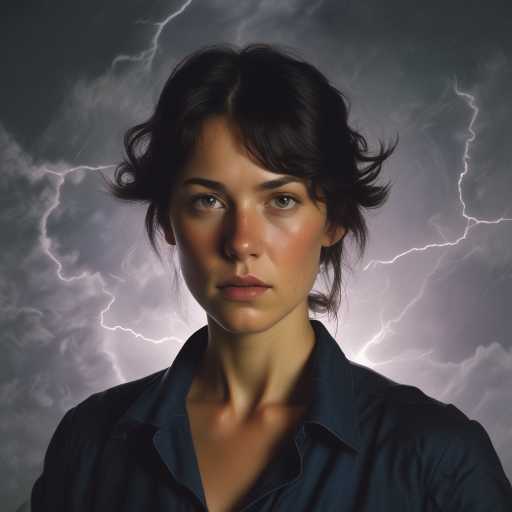
Example Result
Preview and download your result.
API & SDK
Create a Prediction
Send a POST request to create a new prediction. This will return a prediction ID that you'll use to check the result. The request should include your model inputs and API key.
Get Prediction Result
Poll the prediction endpoint with the prediction ID until the result is ready. The API uses long-polling, so you'll need to repeatedly check until you receive a success status.
Readme
Overview
sdxl-lightning-4step — Image-to-Image AI Model
sdxl-lightning-4step from Stability revolutionizes image-to-image AI model workflows by enabling high-quality image transformations in just 4 inference steps, drastically cutting generation time for developers and creators needing rapid edits. Part of the sdxl family, this fast text-to-image model excels at img2img tasks, taking an input image and prompt to produce refined outputs like style transfers or detail enhancements without lengthy sampling. Stability's sdxl-lightning-4step stands out in the competitive landscape of Stability image-to-image tools, delivering photorealistic results that rival multi-step models while supporting efficient API integrations for production-scale AI image editor API applications.
Technical Specifications
What Sets sdxl-lightning-4step Apart
sdxl-lightning-4step differentiates itself with ultra-fast 4-step generation, producing high-fidelity images from text-guided image inputs far quicker than traditional diffusion models requiring 20-50 steps. This enables real-time prototyping for edit images with AI pipelines, where users upload a base image and prompt for instant variations without waiting minutes per iteration.
Optimized for SDXL architecture, it maintains superior perceptual quality and prompt adherence even in few-step mode, outperforming baselines in metrics like PickScore for semantic alignment. Developers benefit from this by scaling automated image editing API services, handling thousands of edits daily on modest hardware like RTX 3060 GPUs.
- 4-step inference: Generates 1024x1024 resolution images in seconds, ideal for high-throughput img2img tasks.
- SDXL base efficiency: Supports FP16 quantization and xformers for low-VRAM runs (12GB+), with outputs in standard PNG/JPEG formats.
- Strong few-step alignment: Excels in text-image coherence, as verified in benchmarks against SDXL-Turbo variants.
These specs make sdxl-lightning-4step a top choice for image-to-image AI model comparisons, prioritizing speed without sacrificing detail.
Key Considerations
Resource Requirements: Higher resolutions and increased inference steps may require more computational resources and longer generation times.
Prompt Clarity: Ambiguous or overly complex prompts may lead to suboptimal results. Test different variations to find the most effective phrasing.
Scheduler Selection: The choice of scheduler significantly impacts the output style. Experiment with different schedulers to achieve the desired effect.
Tips & Tricks
How to Use sdxl-lightning-4step on Eachlabs
Access sdxl-lightning-4step seamlessly on Eachlabs via the Playground for instant testing, API for production apps, or SDK for custom integrations. Provide an input image, text prompt, and optional parameters like strength (0.3-0.8 for img2img) and 4-step guidance scale; receive high-res PNG outputs (up to 1024x1024) in seconds with crisp, aligned results.
---Capabilities
Generate high-resolution, visually appealing images tailored to specific themes or styles with SDXL-Lightning by ByteDance.
Supports a wide variety of artistic and photorealistic styles.
Customizable parameters for creative experimentation.
What Can I Use It For?
Use Cases for sdxl-lightning-4step
For developers building AI photo editing for e-commerce: Feed a product photo with a prompt like "transform this t-shirt onto a model in urban streetwear style, add realistic shadows and fabric texture," and get a polished variant in 4 steps—perfect for generating catalog variations at scale via sdxl-lightning-4step API.
Content creators handling style transfers: Upload a landscape photo and prompt "convert to cyberpunk neon aesthetic with glowing signs and rain-slicked streets" to rapidly iterate artistic edits, leveraging the model's few-step speed for quick feedback loops in creative workflows.
Marketers optimizing ad visuals: Use img2img on brand assets with "place this logo on a luxury car dashboard interior, photorealistic lighting" to create targeted composites, saving hours compared to manual Photoshop for edit images with AI campaigns.
Game designers prototyping assets: Start with a character sketch, apply "add detailed armor plating in medieval fantasy style, consistent lighting," and refine sprites efficiently—ideal for indie teams using Stability image-to-image for consistent animation frames without high-end rigs.
Things to Be Aware Of
Dynamic Outputs for SDXL-Lightning by ByteDance:
- Combine different schedulers with varied inference steps to explore creative possibilities.
- Adjust guidance scale for a mix of adherence to prompts and creative freedom.
High-Quality Details for SDXL-Lightning by ByteDance:
- Use square dimensions with high inference steps and guidance scales.
- Example settings: Width: 1024, Height: 1024, Steps: 10, Guidance Scale: 25.
Limitations
Resolution Limitations: While capable of generating up to 1280x1280 pixels, higher resolutions may impact performance.
Prompt Sensitivity: The model's output quality is highly dependent on the clarity and specificity of the input prompts for SDXL-Lightning by ByteDance.
Scheduler Impact: Some schedulers may produce less refined outputs depending on the selected parameters.
Output Format: PNG
Pricing
Pricing Detail
This model runs at a cost of $0.001540 per second.
The average execution time is 2 seconds, but this may vary depending on your input data.
The average cost per run is $0.003080
Pricing Type: Execution Time
Cost Per Second means the total cost is calculated based on how long the model runs. Instead of paying a fixed fee per run, you are charged for every second the model is actively processing. This pricing method provides flexibility, especially for models with variable execution times, because you only pay for the actual time used.
Related AI Models
You can seamlessly integrate advanced AI capabilities into your applications without the hassle of managing complex infrastructure.
P-image Edit is an image editing model that applies precise, high-quality edits from text prompts with fast performance and consistent results, built for production use cases.

Creates a highly realistic hand-drawn pen sketch effect with natural line pressure, detailed cross-hatching, and authentic paper texture, while preserving the subject’s proportions and overall identity

Edit your images with precision using xAI’s Grok Imagine. Make targeted changes, refine details, and transform visuals while preserving the original quality and structure.

Generates images from text and reference images using Tongyi-MAI’s ultra-fast 6B Z-Image Turbo model for fast, high-quality visual results.