{
  "language": "en",
  "segments": [
    {
      "end": 5.12,
      "text": "AI used to mean juggling multiple tools, APIs, and workflows just to get one result.",
      "start": 0,
      "words": [
        {
          "end": 0.34,
          "word": " AI",
          "start": 0,
          "speaker": "SPEAKER_00",
          "probability": 0.8828125
        },
        {
          "end": 0.7,
          "word": " used",
          "start": 0.34,
          "speaker": "SPEAKER_00",
          "probability": 0.98583984375
        },
        {
          "end": 0.82,
          "word": " to",
          "start": 0.7,
          "speaker": "SPEAKER_00",
          "probability": 0.9990234375
        },
        {
          "end": 1,
          "word": " mean",
          "start": 0.82,
          "speaker": "SPEAKER_00",
          "probability": 0.9931640625
        },
        {
          "end": 1.42,
          "word": " juggling",
          "start": 1,
          "speaker": "SPEAKER_00",
          "probability": 0.9931640625
        },
        {
          "end": 1.8,
          "word": " multiple",
          "start": 1.42,
          "speaker": "SPEAKER_00",
          "probability": 0.99658203125
        },
        {
          "end": 2.38,
          "word": " tools,",
          "start": 1.8,
          "speaker": "SPEAKER_00",
          "probability": 0.99755859375
        },
        {
          "end": 3.2,
          "word": " APIs,",
          "start": 2.64,
          "speaker": "SPEAKER_00",
          "probability": 0.9287109375
        },
        {
          "end": 3.54,
          "word": " and",
          "start": 3.46,
          "speaker": "SPEAKER_00",
          "probability": 0.9970703125
        },
        {
          "end": 3.96,
          "word": " workflows",
          "start": 3.54,
          "speaker": "SPEAKER_00",
          "probability": 0.98486328125
        },
        {
          "end": 4.26,
          "word": " just",
          "start": 3.96,
          "speaker": "SPEAKER_00",
          "probability": 0.92626953125
        },
        {
          "end": 4.4,
          "word": " to",
          "start": 4.26,
          "speaker": "SPEAKER_00",
          "probability": 0.99853515625
        },
        {
          "end": 4.52,
          "word": " get",
          "start": 4.4,
          "speaker": "SPEAKER_00",
          "probability": 0.99853515625
        },
        {
          "end": 4.72,
          "word": " one",
          "start": 4.52,
          "speaker": "SPEAKER_00",
          "probability": 0.99609375
        },
        {
          "end": 5.12,
          "word": " result.",
          "start": 4.72,
          "speaker": "SPEAKER_00",
          "probability": 0.99951171875
        }
      ],
      "speaker": "SPEAKER_00",
      "duration": 5.12,
      "avg_logprob": -0.1499660319608191
    },
    {
      "end": 11.94,
      "text": "Every model spoke a different language, setups took hours, and experimenting felt slow and fragmented.",
      "start": 5.48,
      "words": [
        {
          "end": 6.1,
          "word": " Every",
          "start": 5.48,
          "speaker": "SPEAKER_00",
          "probability": 0.998046875
        },
        {
          "end": 6.38,
          "word": " model",
          "start": 6.1,
          "speaker": "SPEAKER_00",
          "probability": 0.9970703125
        },
        {
          "end": 6.72,
          "word": " spoke",
          "start": 6.38,
          "speaker": "SPEAKER_00",
          "probability": 0.99951171875
        },
        {
          "end": 6.84,
          "word": " a",
          "start": 6.72,
          "speaker": "SPEAKER_00",
          "probability": 0.9970703125
        },
        {
          "end": 7.04,
          "word": " different",
          "start": 6.84,
          "speaker": "SPEAKER_00",
          "probability": 0.99951171875
        },
        {
          "end": 7.54,
          "word": " language,",
          "start": 7.04,
          "speaker": "SPEAKER_00",
          "probability": 0.99951171875
        },
        {
          "end": 8.32,
          "word": " setups",
          "start": 7.86,
          "speaker": "SPEAKER_00",
          "probability": 0.73828125
        },
        {
          "end": 8.58,
          "word": " took",
          "start": 8.32,
          "speaker": "SPEAKER_00",
          "probability": 0.998046875
        },
        {
          "end": 9,
          "word": " hours,",
          "start": 8.58,
          "speaker": "SPEAKER_00",
          "probability": 0.9990234375
        },
        {
          "end": 9.7,
          "word": " and",
          "start": 9.34,
          "speaker": "SPEAKER_00",
          "probability": 0.99609375
        },
        {
          "end": 10.32,
          "word": " experimenting",
          "start": 9.7,
          "speaker": "SPEAKER_00",
          "probability": 0.99609375
        },
        {
          "end": 10.66,
          "word": " felt",
          "start": 10.32,
          "speaker": "SPEAKER_00",
          "probability": 0.9990234375
        },
        {
          "end": 11.06,
          "word": " slow",
          "start": 10.66,
          "speaker": "SPEAKER_00",
          "probability": 0.99853515625
        },
        {
          "end": 11.3,
          "word": " and",
          "start": 11.06,
          "speaker": "SPEAKER_00",
          "probability": 0.9990234375
        },
        {
          "end": 11.94,
          "word": " fragmented.",
          "start": 11.3,
          "speaker": "SPEAKER_00",
          "probability": 0.999755859375
        }
      ],
      "speaker": "SPEAKER_00",
      "duration": 6.459999999999999,
      "avg_logprob": -0.1499660319608191
    },
    {
      "end": 13.74,
      "text": "Now, it's different.",
      "start": 12.24,
      "words": [
        {
          "end": 12.82,
          "word": " Now,",
          "start": 12.24,
          "speaker": "SPEAKER_01",
          "probability": 0.98681640625
        },
        {
          "end": 13.4,
          "word": " it's",
          "start": 13,
          "speaker": "SPEAKER_01",
          "probability": 0.995361328125
        },
        {
          "end": 13.74,
          "word": " different.",
          "start": 13.4,
          "speaker": "SPEAKER_01",
          "probability": 0.99951171875
        }
      ],
      "speaker": "SPEAKER_01",
      "duration": 1.5,
      "avg_logprob": -0.1499660319608191
    },
    {
      "end": 19.32,
      "text": "With a unified AI system, you can generate images, videos, and voices in one place.",
      "start": 14.04,
      "words": [
        {
          "end": 14.62,
          "word": " With",
          "start": 14.04,
          "speaker": "SPEAKER_01",
          "probability": 0.998046875
        },
        {
          "end": 14.72,
          "word": " a",
          "start": 14.62,
          "speaker": "SPEAKER_01",
          "probability": 0.98681640625
        },
        {
          "end": 15.12,
          "word": " unified",
          "start": 14.72,
          "speaker": "SPEAKER_01",
          "probability": 0.98876953125
        },
        {
          "end": 15.5,
          "word": " AI",
          "start": 15.12,
          "speaker": "SPEAKER_01",
          "probability": 0.99609375
        },
        {
          "end": 15.98,
          "word": " system,",
          "start": 15.5,
          "speaker": "SPEAKER_01",
          "probability": 0.98974609375
        },
        {
          "end": 16.34,
          "word": " you",
          "start": 16.16,
          "speaker": "SPEAKER_01",
          "probability": 0.9990234375
        },
        {
          "end": 16.5,
          "word": " can",
          "start": 16.34,
          "speaker": "SPEAKER_01",
          "probability": 0.99951171875
        },
        {
          "end": 16.88,
          "word": " generate",
          "start": 16.5,
          "speaker": "SPEAKER_01",
          "probability": 0.99951171875
        },
        {
          "end": 17.3,
          "word": " images,",
          "start": 16.88,
          "speaker": "SPEAKER_01",
          "probability": 0.9990234375
        },
        {
          "end": 17.86,
          "word": " videos,",
          "start": 17.54,
          "speaker": "SPEAKER_01",
          "probability": 0.9990234375
        },
        {
          "end": 18.12,
          "word": " and",
          "start": 18.04,
          "speaker": "SPEAKER_01",
          "probability": 0.9990234375
        },
        {
          "end": 18.46,
          "word": " voices",
          "start": 18.12,
          "speaker": "SPEAKER_01",
          "probability": 0.9990234375
        },
        {
          "end": 18.7,
          "word": " in",
          "start": 18.46,
          "speaker": "SPEAKER_01",
          "probability": 0.99951171875
        },
        {
          "end": 18.88,
          "word": " one",
          "start": 18.7,
          "speaker": "SPEAKER_01",
          "probability": 0.99951171875
        },
        {
          "end": 19.32,
          "word": " place.",
          "start": 18.88,
          "speaker": "SPEAKER_01",
          "probability": 0.99951171875
        }
      ],
      "speaker": "SPEAKER_01",
      "duration": 5.280000000000001,
      "avg_logprob": -0.1499660319608191
    },
    {
      "end": 25.48,
      "text": "Fewer technical barriers, faster iterations, and more time focused on ideas instead of integration.",
      "start": 19.54,
      "words": [
        {
          "end": 20.22,
          "word": " Fewer",
          "start": 19.54,
          "speaker": "SPEAKER_01",
          "probability": 0.998046875
        },
        {
          "end": 20.52,
          "word": " technical",
          "start": 20.22,
          "speaker": "SPEAKER_01",
          "probability": 0.99951171875
        },
        {
          "end": 21.04,
          "word": " barriers,",
          "start": 20.52,
          "speaker": "SPEAKER_01",
          "probability": 0.99951171875
        },
        {
          "end": 21.86,
          "word": " faster",
          "start": 21.38,
          "speaker": "SPEAKER_01",
          "probability": 0.9990234375
        },
        {
          "end": 22.36,
          "word": " iterations,",
          "start": 21.86,
          "speaker": "SPEAKER_01",
          "probability": 0.99853515625
        },
        {
          "end": 23.1,
          "word": " and",
          "start": 22.68,
          "speaker": "SPEAKER_01",
          "probability": 0.99951171875
        },
        {
          "end": 23.28,
          "word": " more",
          "start": 23.1,
          "speaker": "SPEAKER_01",
          "probability": 1
        },
        {
          "end": 23.56,
          "word": " time",
          "start": 23.28,
          "speaker": "SPEAKER_01",
          "probability": 0.99951171875
        },
        {
          "end": 23.96,
          "word": " focused",
          "start": 23.56,
          "speaker": "SPEAKER_01",
          "probability": 0.9921875
        },
        {
          "end": 24.14,
          "word": " on",
          "start": 23.96,
          "speaker": "SPEAKER_01",
          "probability": 0.99951171875
        },
        {
          "end": 24.6,
          "word": " ideas",
          "start": 24.14,
          "speaker": "SPEAKER_01",
          "probability": 0.9990234375
        },
        {
          "end": 24.98,
          "word": " instead",
          "start": 24.6,
          "speaker": "SPEAKER_01",
          "probability": 0.9921875
        },
        {
          "end": 25.16,
          "word": " of",
          "start": 24.98,
          "speaker": "SPEAKER_01",
          "probability": 0.99951171875
        },
        {
          "end": 25.48,
          "word": " integration.",
          "start": 25.16,
          "speaker": "SPEAKER_01",
          "probability": 0.99951171875
        }
      ],
      "speaker": "SPEAKER_01",
      "duration": 5.940000000000001,
      "avg_logprob": -0.1499660319608191
    }
  ],
  "num_speakers": 2
}Whisper Diarization
Whisper Large V3 Turbo delivers blazing-fast audio transcription with speaker diarization, converting conversations into accurate text with word- and sentence-level timestamps
- Runtime (p50)
- 8s
- Estimated price
- $0.00108 per processing second
Overview
whisper-diarization — Voice-to-Text AI Model
whisper-diarization, powered by OpenAI's Whisper Large V3 Turbo architecture, revolutionizes voice-to-text transcription by delivering blazing-fast audio processing with integrated speaker diarization, accurately distinguishing speakers in conversations while providing word- and sentence-level timestamps.
Developed as part of the Whisper family, this voice-to-text AI model tackles multi-speaker audio challenges that plague standard transcription tools, enabling precise conversion of meetings, podcasts, or interviews into searchable, timestamped text.
With 6x faster inference than Whisper Large V3—thanks to its reduced 4 decoder layers and 809 million parameters—whisper-diarization maintains near-identical accuracy (within 1-2%) while handling 99+ languages.
Ideal for developers seeking OpenAI voice-to-text solutions with diarization, it processes audio via simple API calls on Eachlabs, supporting chunking for large files.
Capabilities
- Accurate transcription of multilingual audio (99+ languages) with robustness to noise, accents, and jargon
- Speaker diarization to label and separate multiple speakers in conversations
- Word- and sentence-level timestamps for precise alignment and searchability
- High-speed inference (216x real-time on optimized setups, 6x faster than base Whisper Large V3)
- Versatile handling of diverse audio from web-scale training data (680k hours)
Use cases
Use Cases for whisper-diarization
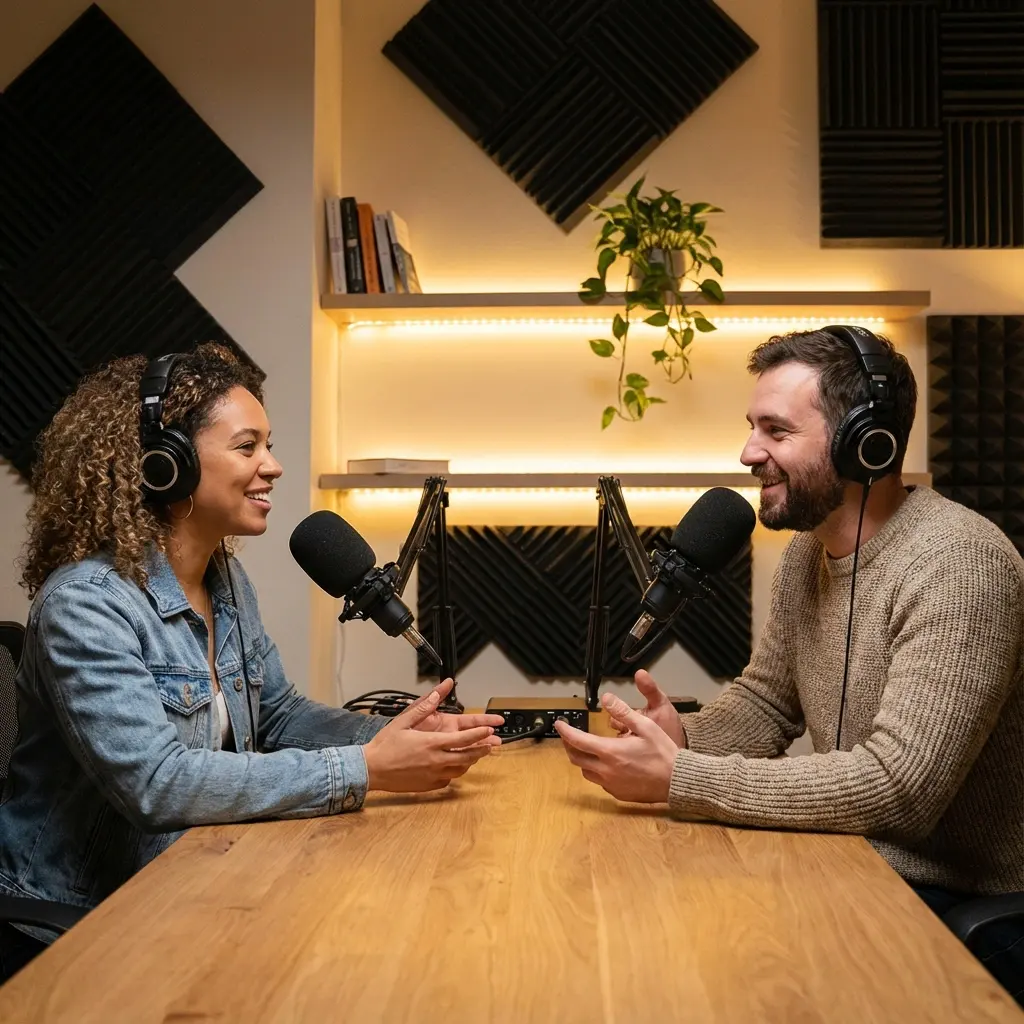
Podcast Producers: Transcribe multi-host episodes with automatic speaker labeling and timestamps, turning hours of raw audio into searchable scripts. Feed a podcast file into whisper-diarization, and it outputs diarized text like "Speaker 1: Welcome to episode 45... Speaker 2: Thanks for having me," streamlining editing workflows for content creators using OpenAI voice-to-text.
Developers Building Transcription Apps: Integrate the whisper-diarization API for apps handling meeting recordings, where self-enrollment handles unknown speakers in noisy boardrooms, delivering low tcpWER even with overlaps—perfect for real-time voice-to-text AI model pipelines.
Marketers Analyzing Customer Calls: Process sales calls to attribute dialogue by speaker, extracting insights like objections or praises with precise timestamps. This diarization edge over generic STT tools helps teams quantify conversation dynamics without manual review.
Researchers in Multilingual Studies: Handle diverse accents and languages in interviews, leveraging 99+ language support and robust noise handling for accurate, diarized transcripts—essential for academic analysis of global dialogues.
Tips & tricks
How to Use whisper-diarization on Eachlabs
Access whisper-diarization seamlessly through Eachlabs' Playground for instant testing, API for production-scale whisper-diarization API deployments, or SDK for custom integrations. Upload audio files (supports chunking for long durations), specify language or diarization parameters, and receive timestamped, speaker-labeled text outputs at 6x Turbo speed with word-level precision.
---
Technical spec
What Sets whisper-diarization Apart
Unlike standard Whisper models, whisper-diarization incorporates advanced diarization conditioning like DiCoW and SE-DiCoW techniques, using self-enrollment to automatically select target speaker segments for superior multi-speaker accuracy, reducing tcpWER by up to 52.4% on benchmarks like EMMA MT-ASR.
This enables reliable transcription in overlapping speech scenarios, such as three-speaker mixes in Libri3Mix, where it outperforms baselines by over 75% relatively, making it ideal for real-world voice-to-text AI model applications with noise and interference.
Built on Whisper Large V3 Turbo's optimized backbone, it offers 6x faster inference with ~10GB VRAM needs, 128 mel-spectrogram bins for robust multilingual support (99+ languages), and sequential long-form decoding in 30-second windows for extended audio.
Key differentiators include:
- Self-enrolled diarization conditioning: Automatically identifies clean target speaker references from recordings, boosting performance in high-overlap conditions without manual enrollment.
- Chunked processing for large files: Splits audio into manageable segments (e.g., 1MB chunks) for scalable transcription, overcoming memory limits in serverless environments.
- Blazing speed with minimal accuracy loss: 6x faster than full Large V3, within 1-2% WER, trained on 680k hours of multilingual data for diverse acoustics.
These specs position whisper-diarization as a top choice for whisper-diarization API integrations demanding efficiency and speaker separation.
Things to be aware of
- Experimental features: Integration with frameworks like Emilia for automated voice cleaning and annotation
- Known quirks: May produce fewer repetitions on long-form audio compared to base models
- Performance considerations: Achieves low latency (~500ms on modern hardware) but benefits from GPUs
- Resource requirements: ~6GB VRAM minimum; scales well with quantization
- Consistency factors: High robustness from diverse training data, performs well on out-of-distribution audio
- Positive user feedback themes: Praised for speed-accuracy balance and multilingual support in benchmarks
- Common concerns: English-focused optimizations in some variants; multilingual relies on Turbo
Key considerations
- Important factors: Ensure high-quality input audio; use GPU with at least 6GB VRAM for optimal speed
- Best practices: Apply voice cleaning and source separation preprocessing for better diarization accuracy
- Common pitfalls: Avoid low-quality or noisy audio without preprocessing, as it can increase insertion errors
- Quality vs speed trade-offs: Turbo variant sacrifices minimal accuracy (1-2%) for 6x speed over full Large V3
- Prompt engineering tips: Not applicable as it's transcription-focused; focus on audio chunking for long-form content to reduce repetitions
Limitations
- Primarily optimized for batch processing; streaming requires additional engineering for low latency
- Diarization accuracy depends on preprocessing; raw multi-speaker audio without separation may degrade performance
- Hardware-dependent speed; edge devices need lighter variants or distillation
Related models
4 models


About Whisper Diarization
What is Whisper Diarization?
Whisper Diarization is an enhanced speech-to-text model based on OpenAI's Whisper that combines transcription with speaker diarization. It identifies and labels individual speakers in an audio recording, attributing each segment of the transcript to the correct speaker for multi-speaker content.