ELEVENLABS
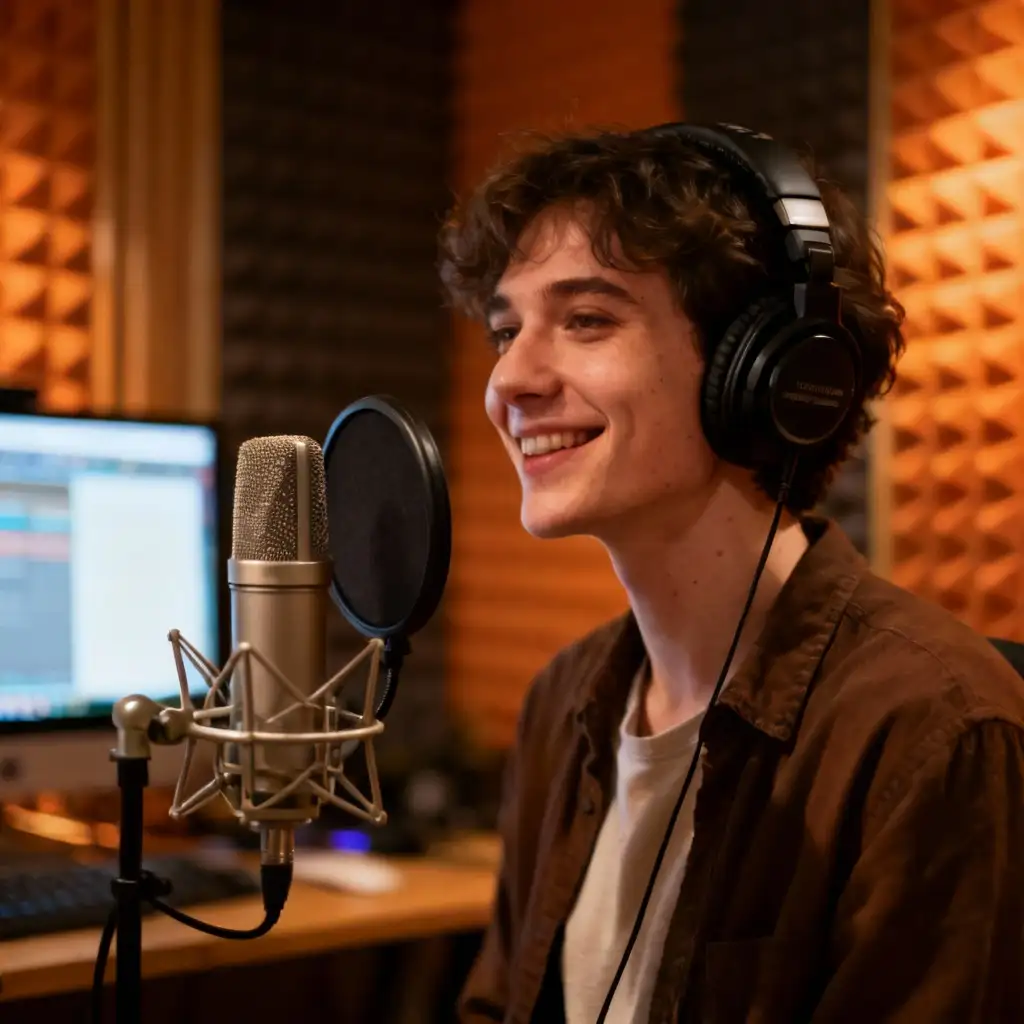
Changes one voice into another while keeping the original speech and emotion. The output sounds natural and clear, making it useful for many voice transformation needs.
Official Partner
Avg Run Time: 10.000s
Model Slug: elevenlabs-voice-changer
Playground
Input
Output
Example Result
Preview and download your result.
API & SDK
Create a Prediction
Send a POST request to create a new prediction. This will return a prediction ID that you'll use to check the result. The request should include your model inputs and API key.
Get Prediction Result
Poll the prediction endpoint with the prediction ID until the result is ready. The API uses long-polling, so you'll need to repeatedly check until you receive a success status.
Readme
Overview
elevenlabs-voice-changer — Voice-to-Voice AI Model
The elevenlabs-voice-changer is a voice-to-voice AI model that transforms one voice into another while preserving the original speech content, emotion, and natural delivery. Developed by ElevenLabs as part of their comprehensive audio transformation suite, this model solves a critical problem for creators, developers, and media professionals: changing a speaker's voice without losing the authenticity and emotional nuance of the original performance.
Unlike generic voice conversion tools, elevenlabs-voice-changer maintains the emotional tone and speech characteristics of the source audio, producing output that sounds natural and clear. This makes it ideal for voice dubbing, character voice transformation, accessibility applications, and creative audio projects where preserving the original intent and feeling is essential. The model integrates seamlessly with ElevenLabs' ecosystem of 10,000+ voices and advanced voice cloning capabilities, giving developers and creators unprecedented flexibility in voice transformation workflows.
Technical Specifications
What Sets elevenlabs-voice-changer Apart
The elevenlabs-voice-changer distinguishes itself through several key capabilities that make it a powerful choice for professional voice transformation:
- Emotion and tone preservation: Unlike many voice-to-voice AI models that flatten emotional delivery, elevenlabs-voice-changer retains the original speaker's emotional nuance, stress patterns, and conversational intent. This is critical for applications like film dubbing, character voice work, and accessibility services where authenticity matters.
- Integration with ElevenLabs' voice ecosystem: Access to 10,000+ pre-built voices plus the ability to use custom voice clones (both Instant Voice Clone and Professional Voice Clone options) gives users unmatched flexibility in selecting target voices for transformation.
- Natural and clear output quality: The model produces speech that sounds genuinely human, avoiding the robotic or artificial artifacts common in earlier voice conversion technologies. This makes it suitable for professional media production, not just experimental use.
- API-first architecture: Built as part of ElevenLabs' developer-focused platform, elevenlabs-voice-changer is designed for seamless integration into applications, workflows, and automation pipelines through their REST API and SDKs.
Key Considerations
- Select the appropriate model variant based on your quality and latency requirements; higher quality models are recommended for batch processing, while low-latency models suit real-time applications
- Ensure reference audio is clean and free of background noise for optimal cloning results; preprocessing with noise reduction tools is advised
- Use emotion control keywords to fine-tune the emotional tone of the output
- Check for audio artifacts and regenerate outputs if necessary, as occasional glitches may occur
- Balance quality and speed by choosing models that fit your workflow; batch generation allows for higher quality at the expense of speed
- Prompt engineering can significantly affect output quality; experiment with different text prompts and emotion tags
Tips & Tricks
How to Use elevenlabs-voice-changer on Eachlabs
Access elevenlabs-voice-changer through Eachlabs' Playground for instant experimentation or integrate it into your application via the REST API. Provide your source audio file and select a target voice from ElevenLabs' 10,000+ voice library or upload a custom voice clone. The model processes your audio and returns high-quality transformed speech that preserves emotional tone and natural delivery. Eachlabs supports batch processing for production workflows and offers flexible pricing for both interactive and API-based usage.
Capabilities
- High-fidelity voice transformation with natural and clear output
- Instant voice cloning from short reference samples
- Emotion control via special keywords and tags
- Multilingual support for over 70 languages
- Accent and gender customization for synthetic voices
- Low-latency generation options for real-time applications
- Robust handling of diverse speech styles and emotional tones
What Can I Use It For?
Use Cases for elevenlabs-voice-changer
Film and video dubbing: Production teams can use elevenlabs-voice-changer to create multilingual versions of content or adapt dialogue for different character interpretations while maintaining the original actor's emotional delivery. A filmmaker might transform a character's voice to match a different age or accent without re-recording dialogue, preserving the original performance's nuance.
Accessibility and inclusive audio: Content creators can generate alternative voice options for audiobooks, educational videos, and podcasts, allowing audiences to choose voices that resonate with them. For example, an audiobook narrator's performance can be transformed into multiple voice variants, expanding accessibility without requiring multiple recording sessions.
Game development and interactive media: Game studios can use voice-to-voice transformation to create character voice variations, generate NPC dialogue in different voices, or adapt voice acting across multiple character roles. Developers building interactive experiences can leverage the API to dynamically transform player-recorded audio into character voices in real time.
Voice talent and creative production: Voice actors and audio engineers can experiment with character voices and vocal styles without extensive re-recording. A voice artist might transform their base performance into multiple character voices for animation, advertising, or interactive content, streamlining production workflows while maintaining performance quality.
Things to Be Aware Of
- Experimental emotion control features may require prompt tuning for optimal results
- Occasional audio artifacts or glitches reported in community feedback; preprocessing and iterative refinement recommended
- Performance varies with model variant; low-latency models trade off some quality for speed
- Requires substantial GPU resources for high-quality batch processing; users recommend at least 8GB VRAM for optimal performance
- Consistency of output improves with cleaner reference audio and careful prompt engineering
- Positive feedback highlights naturalness and emotional nuance of generated voices
- Some users note limitations in hyper-realism compared to human voices, especially in edge cases or complex emotional expressions
- Negative feedback patterns include occasional mismatches in accent or gender and the need for manual regeneration of outputs with artifacts
Limitations
- Requires high-quality reference audio and preprocessing for best results; noisy inputs can degrade output quality
- May not achieve hyper-realistic voice synthesis in all scenarios, especially with complex emotional or accent requirements
- Resource-intensive for batch processing and high-fidelity generation; not optimal for lightweight or low-resource environments
Pricing
Pricing Detail
This model runs at a cost of $0.20 per execution.
Pricing Type: Fixed
The cost remains the same regardless of which model you use or how long it runs. There are no variables affecting the price. It is a set, fixed amount per run, as the name suggests. This makes budgeting simple and predictable because you pay the same fee every time you execute the model.
Related AI Models
You can seamlessly integrate advanced AI capabilities into your applications without the hassle of managing complex infrastructure.
Chatterbox Speech to Speech is a speech model that takes spoken input and produces natural, clear spoken output. It delivers realistic voice results with smooth pacing and easy-to-understand audio.
Mureka Extend Song is a music generation model that continues an existing audio track beyond its original duration.
Automatically translates and dubs speech into other languages while matching voice tone and emotion. Ideal for videos, films, and global content.

Elevenlabs Voice Design V3 generates natural, human-like speech by using a given voice and text input, reproducing the same tone and emotion as the original voice.