KLING-O1
Performs precise image edits with strong reference control, transforming subjects, styles, and local details while preserving overall visual consistency.
Avg Run Time: 0.000s
Model Slug: kling-o1
Release Date: December 2, 2025
Playground
Input
Output
Example Result
Preview and download your result.
API & SDK
Create a Prediction
Send a POST request to create a new prediction. This will return a prediction ID that you'll use to check the result. The request should include your model inputs and API key.
Get Prediction Result
Poll the prediction endpoint with the prediction ID until the result is ready. The API uses long-polling, so you'll need to repeatedly check until you receive a success status.
Readme
Overview
kling-o1 — Image Editing AI Model
kling-o1 is Kling's unified multimodal AI model designed for precise image editing and transformation. Unlike traditional image-to-image tools that apply broad stylistic changes, kling-o1 excels at controlled, reference-based edits where you maintain exact control over what changes and what stays consistent. Whether you're refining character designs, adapting product imagery across contexts, or maintaining brand consistency across visual assets, kling-o1 delivers professional-grade results without manual cleanup.
The model's core strength lies in its ability to accept multiple input types—text prompts combined with reference images—and apply transformations while preserving structural integrity and visual coherence. This makes it particularly valuable for workflows requiring both creative flexibility and strict consistency, such as e-commerce product editing, character animation preparation, and branded content creation.
Technical Specifications
What Sets kling-o1 Apart
Multi-Reference Image Control: kling-o1 supports up to 10 reference images simultaneously, maintaining shape, color, and key details across all inputs. This capability is essential for character consistency work, comic series production, and branded design systems where visual identity must remain stable across variations.
Unified Multimodal Architecture: Built on a Multimodal Visual Language (MVL) framework, kling-o1 consolidates generation and editing into a single semantic space. This means you can combine text prompts with image references, video frames, or multiple images in one pass—eliminating the need to switch between separate tools or run multiple processing steps. The result is faster workflows and more coherent outputs where all inputs influence the final result simultaneously.
Precise Local Detail Transformation: kling-o1 specializes in transforming subjects, styles, and local details while preserving overall composition and structure. This granular control is what separates it from broader image generation models—you can change a character's clothing, adjust lighting on a product, or shift artistic style without losing spatial relationships or background elements.
Technical Specifications: The model outputs up to 1080p resolution, supporting both text-to-image and image-to-image workflows. Processing is optimized for rapid iteration, making it suitable for production pipelines where turnaround time matters.
Key Considerations
- Kling Image O1 is optimized for workflows that rely heavily on reference images; quality and diversity of references (angles, lighting, expressions) have a large impact on output fidelity and consistency.
- Best results are obtained when references clearly show the subject’s key contours, facial features, and material properties without heavy occlusion or extreme compression artifacts.
- The model is designed to “lock in” core subject identity and structure; prompts should focus on scene, pose, style, and local edits rather than trying to redefine the subject’s fundamental identity, which is driven primarily by references.
- Overly conflicting instructions between reference images and text prompts (e.g., mismatched age, gender, or core shape) can lead to artifacts or compromised realism, as reported by early testers in community discussions.
- There is a practical trade‑off between control and spontaneity: heavy reference conditioning yields high consistency but can reduce the model’s freedom to explore highly novel shapes or extreme stylizations.
- Precise local edits generally work better when the prompt explicitly calls out the region and describes both the change and what should remain untouched (e.g., “change only the background to a sunset cityscape; keep the subject’s face, clothing, and lighting unchanged”).
- For complex edits, iterative prompting (coarse global change first, then successive local refinements) tends to outperform a single, very complex prompt, according to user workflow reports.
- High‑resolution outputs can be computationally heavier; users report that large canvases with many local edits may take longer or require more powerful hardware in some environments.
- When using multiple references, it is advisable to keep them stylistically coherent (similar lighting and quality) to avoid the model averaging incompatible cues.
- For style transfer, using a small number of strong, stylistically consistent references is generally more stable than many loosely related style images, according to practical experiments shared by artists and designers.
Tips & Tricks
How to Use kling-o1 on Eachlabs
Access kling-o1 through Eachlabs via the Playground for interactive testing or through the API for production integration. Provide a text prompt describing your desired transformation, upload one or multiple reference images to guide style and structure, and specify your output resolution (up to 1080p). The model processes your inputs through its unified multimodal architecture and returns high-quality edited images ready for immediate use or further refinement.
Capabilities
- High‑fidelity image generation with strong preservation of subject contours, key features, and tonal characteristics across multiple reference images.
- Robust identity consistency for faces, characters, and products across many different poses, compositions, and style variations.
- Fine‑grained, localized editing while maintaining global scene coherence, including background replacement, relighting, and local detail changes aligned with Kling’s broader pixel‑level semantic reconstruction philosophy.
- Strong multi‑reference control: supports up to 10 reference images for a single generation, enabling complex multi‑angle subject modeling and sophisticated style conditioning.
- Versatile style handling: capable of photorealistic, cinematic, illustrative, and stylized outputs, with user reports showing good adherence to style references without losing core subject identity.
- High‑resolution, production‑oriented outputs that integrate well into professional pipelines for design, marketing, and visual development.
- Stable behavior when extrapolating from partial or cropped references, reconstructing full scenes and coherent backgrounds around the locked subject.
- Strong synergy with Kling’s video stack: images generated or edited with Image O1 can be used as consistent keyframes or design references for Kling O1 video workflows, as described in official ecosystem materials.
What Can I Use It For?
Use Cases for kling-o1
E-commerce Product Editing: Product teams can upload a base product photo and apply contextual transformations—"place this white sneaker on a wooden floor with soft studio lighting" or "show this jacket in five different color variations while keeping the fit and pose identical." kling-o1 maintains product structure while adapting presentation, eliminating the need for multiple photo shoots or manual Photoshop work.
Character Design and Animation Preparation: Game developers and animation studios use kling-o1 to iterate on character designs rapidly. Upload a character sketch and request variations: "same character, different hairstyle and outfit, maintaining facial features and body proportions." The multi-reference support ensures consistency across design iterations, reducing the back-and-forth between artists and developers.
Branded Content Creation: Marketing teams leverage kling-o1's reference control to maintain visual consistency across campaigns. Feed the model brand assets (logos, color palettes, style guides as reference images) alongside text prompts to generate on-brand visuals automatically. This is particularly powerful for teams managing content across multiple channels where brand coherence is non-negotiable.
Comic and Illustration Series Production: Comic creators and illustrators use kling-o1 to maintain character consistency across panels and pages. By providing character reference images and style references, creators can generate new scenes and compositions while ensuring characters remain visually identical—a critical requirement for narrative continuity that would otherwise demand manual redrawing.
Things to Be Aware Of
- Experimental behaviors:
- Multi‑reference conditioning is powerful but can behave unexpectedly when references conflict in pose, lighting, or style; users report that the model sometimes averages incompatible cues, leading to “uncanny” blends.
- When references include heavy makeup, filters, or strong color grading, the model may bake those stylistic choices into all outputs unless the prompt explicitly overrides them.
- Known quirks and edge cases:
- Very small or heavily occluded subjects in references can reduce the effectiveness of feature locking, leading to looser identity retention.
- Extreme camera rotations or poses not represented in any reference angle may produce minor identity drift or distorted features, especially for faces.
- Mixing many unrelated style references can produce inconsistent or noisy styles, as noted by artists experimenting with complex style stacks.
- Performance considerations:
- High‑resolution outputs with many references are more computationally demanding; some users note longer generation times when pushing resolution and reference count simultaneously.
- Strong reference conditioning can occasionally make it harder to achieve radical structural changes (e.g., drastic body shape or topology modifications) without first reducing the influence of some references.
- Resource requirements:
- While exact hardware requirements are not formally specified for all deployment contexts, community reports suggest that professional‑grade GPUs are recommended for low‑latency, high‑resolution usage in self‑hosted or on‑prem settings.
- Consistency factors from reviews:
- Positive feedback consistently emphasizes:
- Very high identity and product consistency across multiple scenes and edits.
- Strong adherence to multi‑angle references, especially when they are clean and well‑lit.
- Reliable preservation of layout and global structure during local edits.
- Negative or cautionary feedback patterns include:
- Occasional over‑attachment to reference lighting or color when users want a dramatically different mood.
- Some difficulty when trying to “fight” the references with highly contradictory prompts (e.g., changing core age or facial structure).
- User‑reported themes:
- Many creators view Kling Image O1 as particularly strong for production workflows where consistency is more important than wild novelty.
- Some experimental users note that for purely exploratory, no‑reference creativity, other more unconstrained models may feel more “surprising,” whereas Image O1 excels when guided by clear references and structured prompts.
Limitations
- The model’s strongest capabilities rely on multiple high‑quality reference images; performance degrades when references are low‑quality, inconsistent, or missing critical angles, and it is not primarily optimized as a “from-scratch, no-reference” creativity engine.
- Because the architecture and parameter count are not fully disclosed and no standardized quantitative benchmarks have been published, objective comparisons against other image models rely mostly on qualitative evidence and user reports rather than formal metrics.
- Extreme departures from reference identity (e.g., large changes to facial structure, body shape, or fundamental product geometry) can be difficult to achieve in a single step, making the model less optimal for scenarios that demand radical shape exploration rather than controlled, consistent variation.
Pricing
Pricing Type: Dynamic
Charge $0.028 per image generation
Pricing Rules
| Parameter | Rule Type | Base Price |
|---|---|---|
| num_images | Per Unit Example: num_images: 1 × $0.028 = $0.028 | $0.028 |
Related AI Models
You can seamlessly integrate advanced AI capabilities into your applications without the hassle of managing complex infrastructure.
Flux 2 [klein] 4B Base from Black Forest Labs provides image-to-image editing with precise natural-language controls and hex color–based adjustments.

A face swap model automatically replaces the face in an image with another face while preserving expressions, lighting, and overall realism
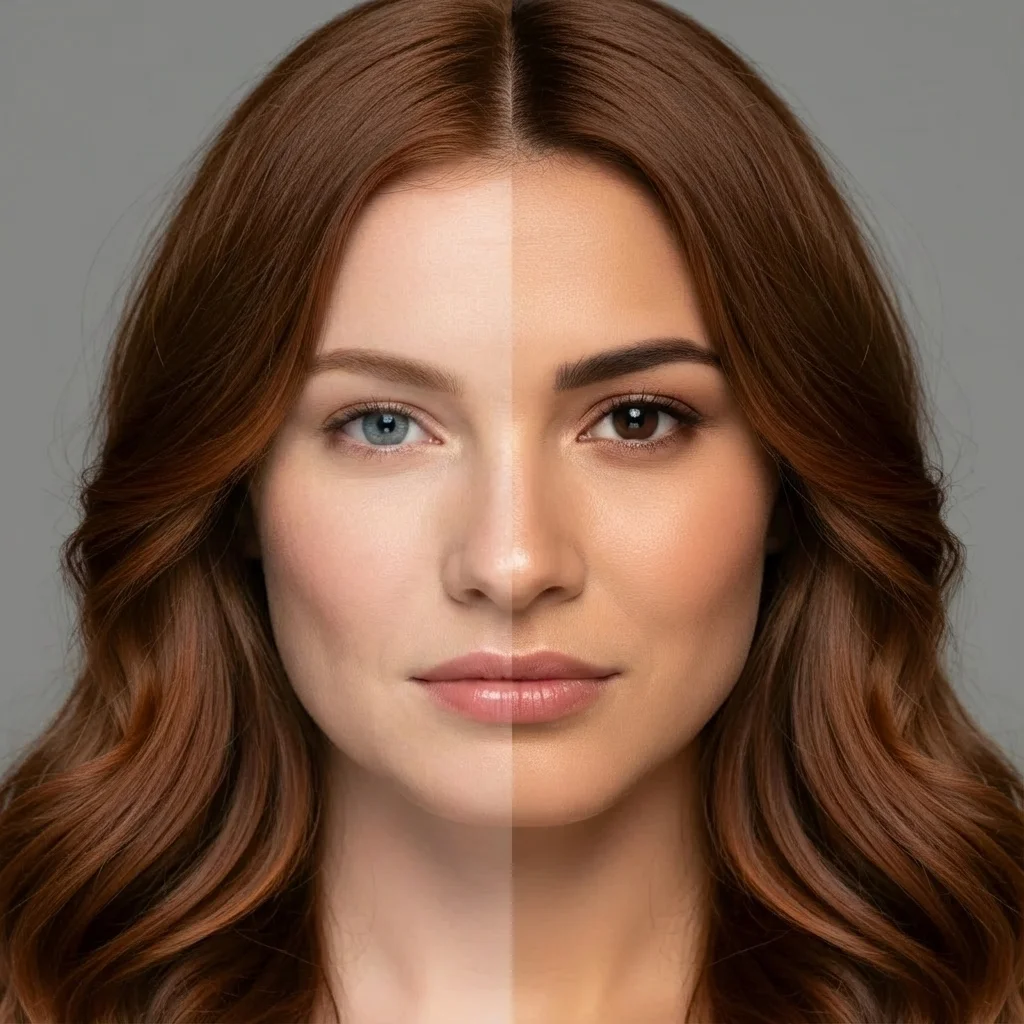
Nano Banana 2 Edit enables advanced image-to-image transformations, delivering ultra high quality refinements, seamless edits, and precise control guided by your prompt.

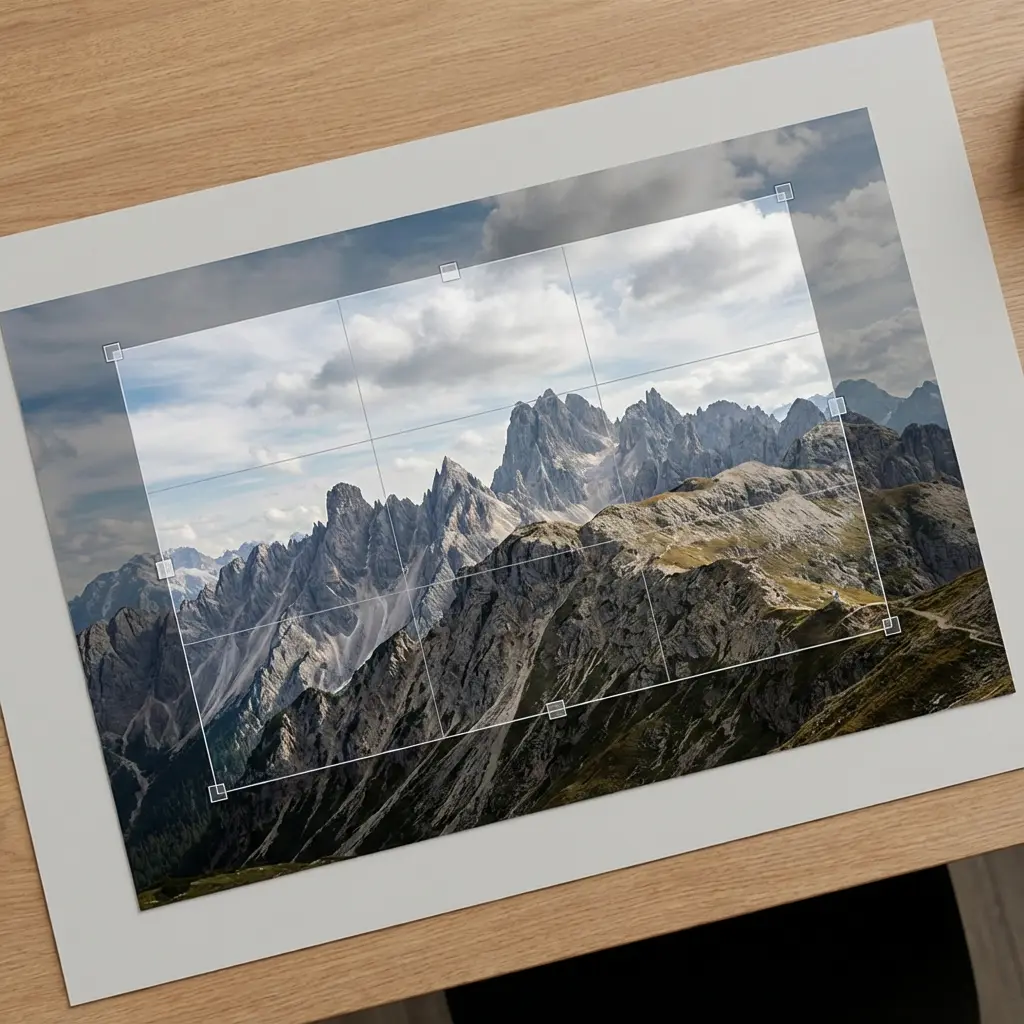
A utility endpoint that crops images efficiently for workflow processing, enabling precise framing and clean image preparation.