Can Google’s Next Gemini Model Solve the Biggest Limitations in Visual AI?
The Nano Banana models built on Google’s Gemini technology have quickly become some of the most discussed tools in both creative and developer circles. While Nano Banana and Nano Banana Edit already deliver strong results in controlled image editing, many users still encounter persistent limitations in refinement workflows, prompt reliability, text handling and structural accuracy. This has created a new question at the center of the discussion: Can Nano Banana Pro meaningfully address the we
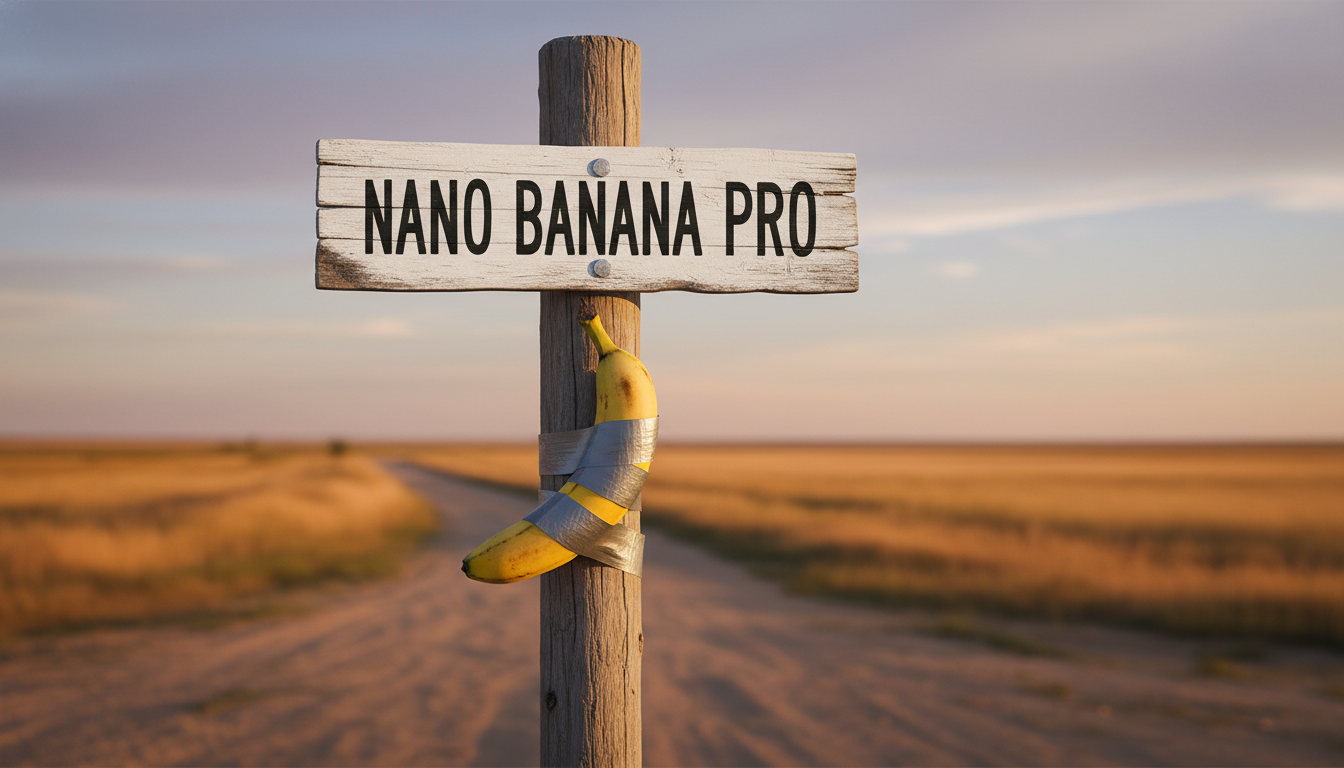
The Nano Banana models built on Google’s Gemini technology have quickly become some of the most discussed tools in both creative and developer circles. While Nano Banana and Nano Banana Edit already deliver strong results in controlled image editing, many users still encounter persistent limitations in refinement workflows, prompt reliability, text handling and structural accuracy. This has created a new question at the center of the discussion:
Can Nano Banana Pro meaningfully address the weaknesses that earlier Nano Banana models revealed?
Inspired by what we see in recent Gemini experiments and supported by early signals found in leaked model tests, this article explores what Nano Banana Pro needs to solve, rather than simply what it might upgrade.
What Problems Does Nano Banana Pro Need to Solve First?
Based on global user feedback and behavior patterns observed across Gemini based tools, four major challenges emerge.
1. Inconsistent prompt interpretation in complex scenes
Even though Nano Banana models have improved their ability to follow instructions, users often report:
- Lost context
- Over-applied effects
- Misread relationships between objects
Nano Banana Pro may need to handle these complexities with a more logical internal representation, similar to what some researchers noted in early GEMPIX2 (Ketchup) test leaks.
2. Text within images remains fragile
Earlier Nano Banana versions struggle with:
- Legible text
- Correct spelling
- Accurate typography
Reports from creators who accessed short-lived preview builds of the upcoming model show promising text accuracy, especially with dense or complex visual layouts. If these early signs reflect the final behavior, Nano Banana Pro may bring Gemini’s strongest text rendering so far.
3. Geometry drift during multi-step editing
One of the biggest workflow blockers is structural drift. A face warps. A hand changes shape. A scene becomes misaligned across iterations.Nano Banana Pro will likely be judged heavily on whether it can maintain geometry during multi-step
refinement.A requirement highlighted repeatedly in user feedback and developer commentary in earlier evaluations.
4. Lack of deeper reasoning behind visual changes
Visual reasoning, object physics, motion logic, spatial relationships was teased in several Nano Banana pro preview leaks. One test even showed the model predicting the trajectory of a falling object based on movement context.If Nano Banana Pro integrates similar reasoning capabilities, it could solve one of the most significant gaps between generative models and real world creative expectations.
How Nano Banana Pro Could Change Prompt Engineering?
Prompt engineering with current Nano Banana models often requires:
- Overexplaining
- Rephrasing
- Breaking instructions down
- Testing several variations to get stable results
Nano Banana Pro may simplify this by:
• Understanding layered instructions in one pass
If the model interprets hierarchy, order and priority in user prompts, it could reduce repetitive iteration.
• Using contextual awareness to maintain visual logic
This includes lighting, object relations and spatial continuity.
• Reducing prompt brittleness
Different prompt styles short, descriptive, narrative.May produce more similar results, reducing guesswork.
How Nano Banana Pro Might Expand Its Technical Abilities
1. Higher resolution generation
Early testers of Nano Banana Pro reported potential 2K and even 4K-tier upscaling, marking a noticeable improvement over earlier versions. If this capability reaches stable production quality, it could allow creators to use final outputs directly in print, advertising assets or high fidelity concept art without requiring third party upscaling tools.
2. Faster inference and improved processing pipelines
GEMPIX2 and Ketchup test builds hinted at significantly faster turnaround times, which aligns with Google’s ongoing push to optimize its Gemini based image systems. For workflows that rely on dozens of adjustments or large batch generation, even small latency reductions can create a meaningful time advantage.
3. Better image-to-image workflows
Short lived previews showed more precise layer manipulation, improved texture retention and a clearer relationship between the original input and the refined output. These improvements would make image-to-image editing feel more predictable, especially for creators who rely on structural accuracy when iterating on character art, product renders or scene compositions.
If these early signals reflect the direction of the final release, Nano Banana Pro may represent one of the most substantial shifts within the Nano Banana models powered by Google’s Gemini technology. Higher resolution options, faster processing and more controlled image-to-image behavior all point toward a tool that could fit naturally into professional pipelines rather than feeling like an experimental feature. While the full specification sheet is still unreleased, the available observations outline a model that aims to reduce friction, add clarity to iterative edits and deliver outputs that require far less corrective work. As Google prepares its next update, Nano Banana Pro stands out as a promising step forward for creators and developers looking for a more stable and refined visual generation experience.